Economic and Geopolitical Analysis of the Eastern Mediterranean
Özet
Doğu Akdeniz'in ekonomik ve jeopolitik analizi, bölgenin tarihsel olarak Akdeniz coğrafyasında en kritik noktalardan biri olmasından dolayı önem taşımaktadır. Bölgenin zengin enerji kaynaklarına yakınlığı ve özellikle Doğu Akdeniz'de yapılan yeni enerji keşifleri, özellikle Sanayi Devrimi sonrasında Batı'nın artan enerji ihtiyaçları bağlamında, bölgenin uluslararası enerji politikalarındaki önemini daha da artırmıştır. Bu kitapta, bölgenin enerji kaynaklarının Doğu Akdeniz'in jeopolitik konumuna olan etkisi incelenmektedir. Bu bağlamda, özellikle Kıbrıs açıklarında bulunan yeni enerji kaynaklarının, sınırdaş devletlerin enerji politikalarını nasıl etkilediği analiz edilmektedir.Kitabın ilk bölümünde, Mücahit ŞİŞLİOĞLU, Türkiye'nin ve bölgenin diğer ülkelerinin Doğu Akdeniz'deki rolünü ve potansiyelini incelemiştir. İkinci bölümde, Emete GÖZÜGÜZELLI, NATO'nun Doğu Akdeniz'deki stratejilerini açıklamıştır. Üçüncü bölümde, Beyhan İNCEKARA ve Ferdi T. GÜÇYETMEZ, İsrail ve Türkiye'nin bölgedeki faaliyetlerinin ekonomik faaliyetlere yansıdığını ve işbirliğine katkı sağladığını belirtmiştir. Dördüncü bölümde, Ferdi T. GÜÇYETMEZ ve Kadir ÜNAL, Türkiye ve İsrail arasındaki jeopolitik işbirliğinin enerji ekseninde nasıl şekillenebileceğini incelemiştir. Son bölümde, Esra GÜÇYETMEZ, Yunanistan'ın Doğu Akdeniz'deki enerji politikalarını açıklamıştır.Bu kitap, Doğu Akdeniz'in jeopolitik ve ekonomik önemini ekonomik analizler aracılığıyla açıklarken, gelecek senaryolarını, fırsatları ve işbirliklerini sunmaktadır.
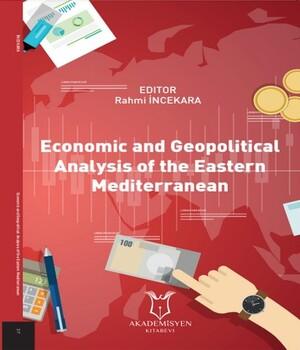
The economic and geopolitical analysis of the Eastern Mediterranean is important due to the region's historical significance as one of the most critical points in the Mediterranean geography. The proximity of the region to rich energy resources, particularly the new energy discoveries in the Eastern Mediterranean, has further increased its importance in international energy policies, especially in the context of the increasing energy needs of the West after the Industrial Revolution. This book examines the impact of the region's energy resources on the geopolitical position of the Eastern Mediterranean. In this context, it analyzes how the new energy resources, especially those found off the coast of Cyprus, affect the energy policies of neighboring states. In the first chapter of the book, Mücahit ŞİŞLİOĞLU examines the role and potential of Turkey and other countries in the Eastern Mediterranean. In the second chapter, Emete GÖZÜGÜZELLI explains NATO's strategies in the Eastern Mediterranean. In the third chapter, Beyhan İNCEKARA and Ferdi T. GÜÇYETMEZ state that the activities of Israel and Turkey in the region have had an impact on economic activities and contributed to cooperation. In the fourth chapter, Ferdi T. GÜÇYETMEZ and Kadir ÜNAL examine how geopolitical cooperation between Turkey and Israel can be shaped in the energy axis. In the final chapter, Esra GÜÇYETMEZ explains Greece's energy policies in the Eastern Mediterranean.This book explains the geopolitical and economic importance of the Eastern Mediterranean through economic analysis and presents future scenarios, opportunities, and collaborations.
Referanslar
Agnantopoulos, A. (2007). “Greece and the Palestinian-Israeli Conflict: A Discursive Constructivist Perspective”. Mediterranean Politics, 12(3), 359-379.
Albert, M. (2015). Greece's New Strategic Environment. Greece: Rand Corporation. Retrieved from https://www.rand.org/content/dam/rand/pubs/monograph_reports/MR1393/MR1393.ch2.pdf
Arapostathis, S., & Fotopoulos, Y. (2019). Transnational energy flows, capacity building and Greece's quest for energy autarky, 1914–2010. Elsevier.
Bahgat, G. (2011). Israel's Energy Security: Regional Implications. Middle East Policy Journal, 17(3), 25-34.
Bimbishis, A. (2017, 05 12). Στρατηγικός ρόλος Κύπρου στην άμυνα της ΕΕ. Retrieved from Philenews: http://www.philenews.com/eidiseis/politiki/article/451820/stratigkos-rolos-kyproy-stin-amyna-tis-ee.
Bindenagel, J., Herdegen, M., & Kaiser, K. (2017). International Security in the 21st Century. Göttingen: Vandenhoeck .
Calleya, P. S. (2017). What prospects for transatlantic relations and the Mediterranean? Malta: Mediterranean Academy of Diplomatic Studies University of Malta.
Carlson, S. (2016). 2016. Pivoting Energy Relations in the Eastern Mediterranean. Turkish Policy Quarterly, 67-78.
Carpenter, S. (2020, January 2). New Pipeline Deal Gives Europe Access To Eastern Mediterranean Gas Reserves, Angering Turkey.
Cesnakas, G. (2010). “Energy Resourcesin Foreign Policy: ATheoretical Approach.”. Baltic Journal of Law & Politics, 3(1), 30-52.
Česnakas, G. (2010). Energy Resources in Foreign Policy: A Theoretical Approach. Baltic Journal of Law & Politics, 3(1), 30-52.
Dagoumas, A., & Flouros, F. (2017). Energy Policy Formulation in Israel Following its Recent Gas Discoveries. International Journal of Energy Economics and Policy, 7(1), 19-30.
DESFA. (2020, 05 25). LNG Facility (Ο Διαχειριστής Εθνικού Συστήματος Φυσικού Αερίου). Retrieved from Ο Διαχειριστής Εθνικού Συστήματος Φυσικού Αερίου: https://www.desfa.gr/en/national-natural-gas-system/lng-facility
Dokos, T. (2016). Energy Cooperation and Security in the Eastern Mediterranean: A Seismic Shift towards Peace or Conflict? Research Paper , The S. Daniel Abraham Center for International and Regional Studies, Chapter 3.
Dokos, T., & Tsakonas, P. (2018). Promoting Collective Security Schemes in the Eastern Mediterranean. Girona: Euro-Mediterranean Study Commission.
Efthymiou, S. (2016). Te development of the ideology of defence: Militarism in post-war Cyprus. Defence Studies,, 408-426.
Gastrade SA. (2020, 04 30). GASTRADE. Retrieved from gastrade.gr: http://www.gastrade.gr/en/the-company/the-project.aspx
Gurbanov, I. (2017). Perspective For ‘Turkish Stream’ Project: Possible Scenarios And Challenges. Retrieved from Natural Gas World: https://www.naturalgasworld.com/perspective-for-turkish-stream-project-possible-scenarios-and-challenges-35401
Hadfield, A. (2012). “Energy and Foreign Policy: EU-Russia Energy Dynamics.”. London: Oxford Universit Press.
Hayes, M. (2006). “Politics, Markets, and the Shift to Gas.”. NewYork: Cambridge University Press.
Interconnection Turkey Greece Italy (ITGI) Pipeline. (n.d.). Retrieved from https://www.hydrocarbons-technology.com/projects/turkeygreeceitalypip/
Interconnector, ICGB. (2020, Mai 15). Over 70 km of line pipes for the interconnector Greece-Bulgaria have been delivered. Retrieved from Icgb Interconnector: https://www.icgb.eu/over-70-km-of-line-pipes-for-the-interconnector-greece-bulgaria-have-been-delivered
Ioakimidis, P. C. (1999). “The Model of Foreign Policy-Making in Greece:Personalities versus Institutions”. Athenian: Stavridis.
Kontos, M. (2018). “Power Gamesin the Exclusive Economic Zone of the Republic of Cyprus: The Trouble with Turkey’s Coercive Diplomacy.”. The Cyprus Review, 30(1), 51-70.
Le Billion, P. (2005). “The Geopolitical Economy of Resource Wars.”. The Geopolitics of Resource Wars: Resource Dependence, 3(1), 1-28.
Manolis, D., & Loverdos, E. (n.d.). The East Med Pipeline. 2013: Oxford Energy Forum.
O’Sullivan, M. (2013). .“The Entanglement of Energy, Grand Strategy, and International Security.”. The Handbook of Global Energy, 31(2), 30-47.
Pace, R. (2004). “Parliaments and Civil Society Cooperation in the Euro-Mediterranean Partnership”,. Mediterranean Quarterly, 15(1), 79.
Papaspanos, J. (2010). Caspian energy Geopolitics: The Rise and Fall of Burgas-Alexandroupoli. Research Institute for European and American Studies.
Pawłowski, M. (2020, March 9). Greece’s Eastern Mediterranean Policy. The Polish Institut of International Affairs. Bulletin. Retrieved March 9, 2020, from https://pism.pl/publications/Greeces_Eastern_Mediterranean_Policy
Prontera, A., & Ruszel, M. (2017). “Energy Security in the Eastern Mediterranean.”. Middle East Policy, 12(6), 145-162.
Rapiea, A. (2016). Assessing the Future of Energy Security in EgypT. International Journal of Energy Economics and Policy, 6(4), 684-700.
Richert, J. (2019, 05 29). IGB Project. Retrieved from ICGB Interconnector: https://www.icgb.eu/about/igb_project
Rozakis, C. (1986). “Greek foreign policy 1974-85: Modernization and the international role of a small state”. Athens: Exandas,.
Sartori, N. (2014). The Mediterranean Energy Relations after the Arab Spring: Towards a New Regional Paradigm? Centre de la Méditerranée moderne et contemporaine.
Shaffer, B. (2009). Energy Politics. . Pennsylvania: University of Pennsylvania Press.
Shaffer, B. (2013). “Natural Gas Supply Stability and Foreign Policy.”. Pennsylvania: University of Pennsylvania Press.
Silove, N. (2017). .“Beyond the Buzzword: The Three Meanings of‘Grand Strategy’.”. Security Studies, 27(1), 27-57.
Socor, V. (2016, March 9). Turkey-Greece-Italy Interconnector: South Stream’s Latest Avatar? (Part Three). (13). Eurasia Daily Monitor. Retrieved from https://jamestown.org/program/turkey-greece-italy-interconnector-south-streams-latest-avatar-part-three/
Starvis, G. (2012). The New Energy Triangle of Cyprus-Greece-Israel: Casting a Net for Turkey? İstanbul: Turkish Policy Quarterly.
Tsakaloyiannis, P. (2005). “Greek Foreign Policy and Systemic Change”. Athens: Livanis.
Tsakırıs, T. (2014, June). Greece and The Energy Geopolitics of The Eastern Mediterranean. The London School of Economics and Political Science.
Tsardanidis, C. (2019). Greece’s Changing Role In The Eastern Mediterranean. In Z. Tziarras (Ed.), The New Geopolitics of The Eastern Mediterranean: Trilateral Partnership and Regionanl Partnership. Nicosia.
Tziarras, Z. (2016). “Israel-Cyprus-Greece: A‘Comfortable’Quasi-Alliance.”. Mediterranean Politics, 21(3), 407-427.
Tziarras, Z. (2019). The New Geopolitics of the Eastern Mediterranean: Trilateral Partnerships and Regional Security. Nicosia: Frıedrıch Ebert Stiftung.
Veremis, T. (1993). “International Relations in Southern Europe”. London: Southern European Studies Guide.
Winrow, G. (2016). .“The Anatomy of a Possible Pipeline: The Case of Turkey and Leviathan and Gas Politicsin the Eastern Mediterranean.”. Journal of Balkan and Near Eastern Studies, 18(5), 431-447.
İndir
Yayınlanan
Lisans
LisansBu İnternet Sitesi içeriğinde yer alan tüm eserler (yazı, resim, görüntü, fotoğraf, video, müzik vb.) Akademisyen Kitabevine ait olup, 5846 sayılı Fikir ve Sanat Eserleri Kanunu ve 5237 sayılı Türk Ceca Kanunu kapsamında korunmaktadır. Bu hakları ihlal eden kişiler, 5846 sayılı Fikir ve Sanat eserleri Kanunu ve 5237 sayılı Türk Ceza Kanununda yer alan hukuki ve cezai yaptırımlara tabi olurlar. Yayınevi ilgili yasal yollara başvurma hakkına sahiptir.
