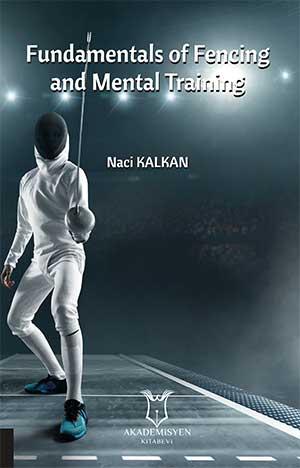
Fundamentals of Fencing and Mental Training
Özet
Bu kitap, eskrimde temel becerilerin ve zihinsel antrenmanın önemini vurgulamaktadır. Yazar, eskrimde fiziksel üstünlüğün yanı sıra dikkat, konsantrasyon, hırs, inanç ve sakin kalabilme gibi özelliklerin başarı için önemli olduğunu belirtmektedir. Kitap, eskrimde sporcuların zihinsel becerilerini geliştirmek için bilimsel olarak kullanılan yöntemlerin uygulanmasına rehberlik etmek amacıyla yazılmıştır. Bu kitap, antrenörlerin yönlendireceği tekniklerle sporcuların performansına olumlu katkıda bulunmayı hedeflemektedir. Eskrim hakkında temel bilgilerin yanı sıra, genel motor özelliklerin ve hareketlerin de ele alındığı bu kitap, eskrimde başarıya ulaşmak isteyen herkes için bir kılavuz niteliği taşımaktadır.
This book emphasizes the importance of basic skills and mental training in fencing. The author states that in addition to physical superiority, qualities such as attention, concentration, determination, belief, and the ability to remain calm are important for success in fencing. The book is written with the aim of guiding the application of scientifically used methods to improve athletes' mental skills in fencing. This book aims to positively contribute to athletes' performance through techniques guided by coaches. In addition to providing basic information about fencing, this book also addresses general motor characteristics and movements, making it a guide for anyone who wants to achieve success in fencing.
Referanslar
Aksu S. Denge eğitiminin etkilerinin posteroural stres testi ile değerlendirilmesi, Hacettepe Üniversitesi Sağlık Bilimleri Enstitüsü Bilim Uzmanlığı Tezi, Ankara, 1994.
Ara, B. (2012). Günümüz tiyatro eğitiminde bir model olarak eskrim (Doctoral dissertation, Sosyal Bilimler Enstitüsü).
Aracı H. (2004). Öğretmenler ve Öğrenciler İçin Okullarda Beden Eğitimi. Ankara: Nobel yayın dağıtım.
Baltaci G, Harput G, Haksever B, Ulusoy B, Ozer H. Comparison between Nintendo Wii Fit and conventional rehabilitation on functional performance outcomes after hamstring anterior cruciate ligament reconstruction: a prospective, randomized, controlled, double-blind clinical trial. Knee Surg Sports Traumatol Arthrosc. 2013;21(4): 880-87
Bandura, A. (2010). Self‐efficacy. The Corsini encyclopedia of psychology, 1-3.
Barth, B., & Barth, K. (2006). Training fencing. Oxford: Meyer & Meyer Sport.
Barth, B., Beck, E., & Janka, C. (2017). The complete guide to fencing. Maidenhead: Meyer & Meyer Sport.
Bencke J, Damsgaard R, Saekmose A, Jorgenson P, Jorgenson K, Klauen K, 2002.Anaerobic Power and Muscle Strength Characteristics of 11 Years Old Elite and Non-Elite Boys and Girls From Gymnastics, Team Handball, Tennis and Swimming, Scandinavian Journal of Medicine and Science in Sports, 12: 171-178.
Beran, M. (2008). Reaction Time. PsycTESTS Dataset. DOI:10.1037/t11647-000
Bilge M, 2013. Stretching ilkeleri. Ankara, Nobel Yayıncılık, s. 5-21, 144-305
Bompa, T. O. (1998). Antrenman kuramı ve yöntemi. Ankara: Bağırgan Yayınevi.
Bompa, T. O., Pasquale, M. D., & Cornacchia, L. J. (2013). Serious strength training. Leeds: Human Kinetics.
Bompa, T.O., Haff G., (2009). “Periodization Theory And Methodology Of Training,” Fifth Edition.
Bompa, TO, 2001. Sporda çabuk kuvvet antrenmanı. Çev: Bağırgan T. Ankara: Bağırgan Yayınları.
Burton, D. (1988). Do anxious swimmers swim slower? Reexamining the elusive anxiety-performance relationship. Journal of sport and exercise psychology, 10(1), 45-61.
Burton, D., & Raedeke, T. D. (2008). Sport psychology for coaches. Human Kinetics.
Clark, A.M., Lucett, S.C., (2010).” NASM Essentials Sports Performance Training,”, First Edition.
Cox, R. H. (2012). Sport psychology: concepts and applications. 7th ed. New York: McGraw-Hill.
Demir M. Atletizm Koşuları, Ankara, Orsen Matbaa, 1997
Dick, F. W. (2007). Sports Training Principles.
Ergen, E., Demirel, H., Güner, R., Turnagöl, H., Başoğlu, S., Zergeroğlu, A. M., & Ülkar, B. (2002). Egzersiz fizyolojisi. Ankara: Nobel Yayın Dağıtım Ltd. Şti.
FIE, Technical Rules, 2019 Retrieved From:https://static.fie.org/uploads/23/119683-Technical%20rules%20ang%20%281%29.pdf
Fox, E.L., Bowers, R.W. (1988). The physiological Basis of Physical Education and Athletics, Sounder College Publishing, USA.
Garret, M. R., Kaidanov, E. G., & Pezza, G. (1994). Fencing: foil, sabre, and épée. University Park, PA: Pennsylvania State University Press.
Hanin, Y., & Stambulova, N. (2002). Metaphoric description of performance states An application of the IZOF model. The Sport Psychologist, 16, 396–415.
Harre, D. (1975). Trainingslehre. Berlin: Sportverlag.
Hull, Clark Leonard. (1943) Principles of behavior, an introduction to behavior theory New York, D. Appleton-Century Company, incorporated
Jacobson E. “Electrical measurements of neuromuscular state during mental 77 activities”, American Journal of Physiology, 96: pp. 115-121, 1930
Kanji, N. (1997). Autogenic training. Complementary Therapies in Medicine, 5(3), 162-167.
Kasser, T., & Ryan, R. M. (1996). Further examining the American dream: Differential correlates of intrinsic and extrinsic goals. Personality and social psychology bulletin, 22(3), 280-287.
Kaya F, Yüktaşır B, Biçer B, Yalçın HB, 2004. Esneklik, sürat ve çabukluk ilişkisi. Spor ve Tıp Dergisi, 12, 1.
Kolayiş H. Futbolcularda Zihinsel Hayal Etme Antrenmanının Kaygı Üzerine Etkisi. Yüksek Lisans Tezi, Kocaeli, 2002
Konter E. Spor Psikolojisi Uygulamalarında Yanılgılar ve Gerçekler, Dokuz Eylül Yayınları, s. 7, 31, 32, 37, Ankara, 2003.
Locke, E. A., & Latham, G. P. (1990). A theory of goal setting & task performance. Prentice-Hall, Inc.
Locke, E. A., Shaw, K. N., Saari, L. M., & Latham, G. P. (1981). Goal setting and task performance: 1969–1980. Psychological Bulletin, 90(1), 125.
Lunenburg, F. C. (2011). Goal-setting theory of motivation. International journal of management, business, and administration, 15(1), 1-6.
Martens, R., Burton, D., Vealey, R. S., Bump, L. A., & Smith, D. E. (1990). Development and validation of the Competitive State Anxiety Inventory-2. In R. Martens, R. S. Vealey, & D. Burton (Eds.), Competitive anxiety in sport (Part III). Champaign, IL: Human Kinetics
Martens, R., Vealey, R. S., & Burton, D. (1990). Competitive anxiety in sport. Human kinetics.
Martin, L. (2016). Sports performance, measurement, and analytics: The science of assessing performance, predicting future outcomes, interpreting statistical models, and evaluating the market value of athletes. Old Tappan, NJ: Pearson Education.
Massey, W. V. (2013). Behavior change in applied sport psychology: The use of processes of change in psychological training for athletes.
Mayer, R. E. (2010). Motivation Based on Self- efficacy. Learning and Instruction, pp. 504-510
McArdle, W. D. (2014). Exercise Physiology. Philadelphia: Lippincott Williams and Wilkins.
McArdle, W. D., Katch, F. I., & Katch, V. L. (2010). Exercise physiology: nutrition, energy, and human performance. Lippincott Williams & Wilkins.
Muratlı, S. (1987). Sportif Hareketlerin Biyomekanik Temelleri, M.E.B. Yayın No:57, Ankara
Muratlı, S. (1991). Çocuk ve Gençlerde Dayanıklılık Antrenmanı. Spor ve Bilim Dergisi
Quinlan, J. R. (1994). Comparing connectionist and symbolic learning methods. In Computational learning theory and natural learning systems: Constraints and prospects.
Robazza, C., Bortoli, L., Nougier, V. (1999). Emotions, heart rate, and performance in archery. Journal of Sports Medicine and Physical Fitness, 39, 169-176.
Robazza, C., Bortoli, L., & Nougier, V. (1999). Emotions, heart rate, and performance in archery: A case study. Journal of Sports Medicine and Physical Fitness, 39, 169–176.
Rugelj D. The effect of functional balance training in frail nursing home residents. Arch Gerontol Geriatr. 2010;50(2): 192-97.
Ryan, R. M., & Deci, E. L. (2017). Self-determination theory: Basic psychological needs in motivation, development, and wellness. Guilford Publications.
Sackett, R. S. (1934). The influence of symbolic rehearsal upon the retention of a maze habit. The Journal of General Psychology, 10(2), 376-398.
Schultz, J. H., & Luthe, W. (1959). Autogenic training: A psychophysiological approach to psychotherapy.
Sevim Y, 2002. Antrenman bilgisi. Ankara Nobel Yayın Dağıtım
Sevim, Y. (2010). Antrenman bilgisi. Ankara: Fil Yayınevi.
Smith, J. (2003). Foil fencing: the techniques and tactics of modern foil fencing. Chichester: Summersdale.
Surhone, L. M., Timpledon, M. T., & Marseken, S. F. (2010). Sabre (Fencing). Beau Bassin: VDM Publishing House.
Şimşek D. Ertan H. Sugötüren M. Mülazımoğlu Ballı Ö. Posteroural kontrol ve spor: Spor branşlarına yönelik posteroural Sensör-Motor stratejiler ve posteroural salınım. Spormetre Beden Eğitimi Ve Spor Bilimleri Dergisi, 2011; 9(3), 81-9
Tiryaki Ş . Spor Psikolojisi: Kavramlar, Kuramlar ve Uygulama. s. 59-64, Eylül Kitap ve Yayınevi, Ankara, 2000.
Tiryaki, Ş. (2000). Spor psikolojisi: kavramlar, kuramlar ve uygulama. Eylül kitabevi ve yayınevi.
Tok, S. (2008). Performans sporcusu ve spor yapmayan üniversite öğrencilerinde duygusal zeka ile kişilik özelliklerinin karşılaştırılması. Sporda Psiko Sosyal Alanlar Anabilim Dalı, Doktora Tezi, İzmir, 48.
Weinberg, Robert S.Gould, Daniel. (2011) Foundations of sport and exercise psychology /Champaign, IL: Human Kinetics,
Xiong, J. (2012). The Functions and Methods of Mental Training on Competitive Sports. Physics Procedia, 33, 2011–2014. https://doi.org/https://doi.org/10.1016/j.phpro.2012.05.316
Zorba, E. (2001). Fiziksel Uygunluk. Gazi Kitapevi
Yayınlanan
Lisans
LisansBu İnternet Sitesi içeriğinde yer alan tüm eserler (yazı, resim, görüntü, fotoğraf, video, müzik vb.) Akademisyen Kitabevine ait olup, 5846 sayılı Fikir ve Sanat Eserleri Kanunu ve 5237 sayılı Türk Ceca Kanunu kapsamında korunmaktadır. Bu hakları ihlal eden kişiler, 5846 sayılı Fikir ve Sanat eserleri Kanunu ve 5237 sayılı Türk Ceza Kanununda yer alan hukuki ve cezai yaptırımlara tabi olurlar. Yayınevi ilgili yasal yollara başvurma hakkına sahiptir.
