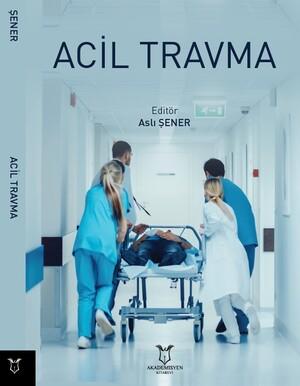
Kardiyak Travmalar
Synopsis
Cardiac traumas are critical injuries that develop through blunt and penetrating mechanisms, significantly determining patient outcomes, carrying high mortality rates, and sometimes presenting with insidious clinical courses. Blunt cardiac traumas mostly occur as a result of motor vehicle accidents, falls from height, crush injuries, and explosions, most frequently affecting the right atrium and right ventricle. These traumas can lead to myocardial contusion (commotio cordis), conduction abnormalities, dysrhythmias, myocardial infarction, and myocardial rupture, which carries a high risk of death. ECG changes, troponin levels, and echocardiography play a critical role in the diagnosis and monitoring processes. Penetrating cardiac traumas, on the other hand, frequently occur due to gunshot or stab wounds, are most commonly seen in the right ventricle, and cause massive hemorrhage and acute pericardial tamponade. In pericardial tamponade, increased intrapericardial pressure reduces cardiac output, where the Beck triad (hypotension, jugular venous distension, and muffled heart sounds) along with bedside FAST ultrasonography stand out in diagnosis. Emergency management involves fluid resuscitation, pericardiocentesis, and, for unstable patients, life-saving emergency department thoracotomy followed by surgical repair. Intracardiac bullets should be removed if they cause hemodynamic instability, embolism, thrombosis, or endocarditis.
References
De Lesquen H, Avaro J-P, Gust L, et al: Surgical management for the first 48 hours following blunt chest trauma: state of the art (excluding vascular injuries). Interact Cardiovasc Thorac Surg 20(3):399–408, 2015.
Link MS: Commotio cordis: ventricular fibrillation triggered by chest impact-induced abnormalities in repolarization. Circ Arrhythm Electrophysiol 5(2):425–432, 2012.
Kalin J, Madias C, Alsheikh-Ali AA, et al: Reduced diameter spheres increases the risk of chest blow-induced ventricular fibrillation (commotio cordis). Heart Rhythm 8(10):1578–1581, 2011.
Link MS, Mark Estes NA, Maron BJ, et al: Eligibility and disqualification recommendations for competitive athletes with cardiovascular abnormalities: task force 13: commotio cordis: a scientific statement from the American Heart Association and American College of Cardiology. Circulation 132(22):e339–e342, 2015.
Gunay C, Cingoz F, Kuralay E, et al: Surgical challenges for urgent approach in penetrating heart injuries. Heart Surg Forum 10: E473, 2007. [PMID: 18187381]
Reddy D, Muckart DJ: Holes in the heart: an atlas of intracardiac injuries following penetrating trauma. Interact Cardiovasc Thorac Surg 19: 56, 2014. [PMID: 24659550]
Elie MC: Blunt cardiac injury. Mt Sinai J Med 73: 542, 2006. [PMID: 16568196]
Pasquale M, Fabian TC: Practice management guidelines for trauma from the Eastern Association for the Surgery of Trauma. J Trauma 44: 941, 1998. [PMID: 9637148]
Bromberg WJ, Collier BC, Diebel LN, et al: Blunt cerebrovascular injury practice management guidelines: the Eastern Association for the Surgery of Trauma. J Trauma 68(2):471–477, 2010.
de Mestral C, Dueck A, Sharma SS, et al: Evolution of the incidence, management, and mortality of blunt thoracic aortic injury: a population-based analysis. J Am Coll Surg 216(6):1110–1115, 2013.