e-Spor Tüketimi ve Tüketici Motivasyonları
Özet
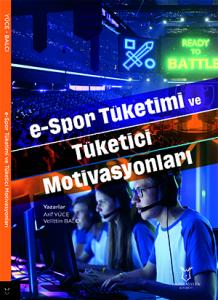
Arif Yüce ve Velittin Balcı tarafından kaleme alınan "e-Spor Tüketimi ve Tüketici Motivasyonları" adlı eser, küresel çapta milyar dolarlık devasa bir endüstriye dönüşen e-sporun kavramsal boyutunu, tarihsel gelişim çizgisini ve tüketici davranışları üzerindeki dönüştürücü etkilerini derinlemesine incelemektedir. Akademisyen Kitabevi tarafından yayımlanan bu kitap; e-spor ekosistemini, oyuncuları, izleyicileri, takımları, medya kanallarını ve sponsorları geleneksel sporlarla karşılaştırarak spor yönetimi ve spor pazarlaması perspektifinden bütüncül bir yaklaşımla ele almaktadır. Çalışmanın temel amacı, Türkiye'deki e-spor tüketicilerinin tüketim motivasyonlarını ve tüketim biçimlerini bilimsel metotlarla ortaya koymaktır. Bu doğrultuda Türk toplum yapısına ve kültürel dinamiklerine uygun olarak geliştirilen geçerli ve güvenilir "e-Spor Tüketim Ölçeği (ETÖ)", ulusal ve uluslararası literatüre özgün bir akademik katkı sunmaktadır. Araştırma sonucunda e-spor tüketim motivasyonları; Dijital Rekreasyon, Başarı-Rekabet İsteği, Yaşam Biçimi, Teknik Gelişim ve Mesleki Beklenti olmak üzere beş temel ana boyutta sınıflandırılmıştır. Eser, dijitalleşen dünyanın sunduğu yeni tüketim biçimlerini, e-spor pazarındaki fırsatları ve hedef kitle dinamiklerini anlamak isteyen akademisyenler, araştırmacılar, spor yöneticileri, oyun geliştiricileri ve pazarlama profesyonelleri için başvuru kaynağı niteliğindedir.
Authored by Arif Yüce and Velittin Balcı, "e-Spor Tüketimi ve Tüketici Motivasyonları" (e-Sports Consumption and Consumer Motivations) thoroughly examines the conceptual dimension, historical evolution, and transformative effects on consumer behavior of e-sports, which has evolved into a billion-dollar global industry. Published by Akademisyen Kitabevi, this book addresses the e-sports ecosystem—including players, viewers, teams, media channels, and sponsors—by comparing it with traditional sports through the holistic lens of sports management and sports marketing. The primary objective of the study is to determine the consumption motivations and patterns of e-sports consumers in Türkiye using scientific methods. In this regard, the valid and reliable "e-Sports Consumption Scale (ETÖ)", developed in accordance with Turkish social structure and cultural dynamics, offers an original academic contribution to national and international literature. As a result of the research, e-sports consumption motivations are categorized into five core dimensions: Digital Recreation, Achievement-Competition Desire, Lifestyle, Technical Development, and Professional Expectation. This work serves as an indispensable reference guide for academics, researchers, sports managers, game developers, and marketing professionals seeking to understand the new consumption patterns, market opportunities, and target audience dynamics offered by the digitalizing world.
Referanslar
ABBASI AZ, ASİF M, HOLLEBEEK LD, ISLAM JU, TING, DH, REHMAN U (2021). The effects of consumer esports videogame engagement on consumption behaviors. Journal of Product & Brand Management, 30(8), 1194-1211.
ADAMUS T (2012). Playing computer games as electronic sport: In search of a theoretical framework for a new research field. In: Computer games and new media cultures, Ed.: Frommes J., Unger, A. Springer. p.: 477-490.
AKSU HS, DEMİREL DH, KAYA A, DEMİREL M. e-Spor Faaliyetlerinin Rekreasyon ve Spor Açısından Değerlendirilmesi. Akademik Serbest Zaman ve Rekreasyon Araştırmaları. İçinde: Akademik Serbest Zaman ve Rekreasyon Araştırmaları, Ed.: Kaya A., Uslu S. NEÜ Yayınları. s.: 41-65.
ALEXANDER P. (2020). E-sports for Dummies. John Wiley & Sons.
ALVES RT, ROQUE L. (2007). Because players pay: The business model influence on mmog design, Proceedings of DiGRA 2007, 658-663.
ANDERSON D, SWEENEY K, PASQUİNİ, ESTES B, ZAPALAC R. (2021). An exploration of esports consumer consumption patterns, fandom, and motives. International Journal of eSports Research (IJER), 1(1), 1-18.
ANDERSON JC, GERBING DW. (1982). Some methods for respecifying measurement models to obtain unidimensional construct measurement. Journal of Marketing Research, 19(4), 453-460.
ANDERSON JC, GERBİNG, D.W. (1988). Structural equation modeling in practice: a review and recommended two-step approach. Psychological Bulletin, 103, 411-423.
Apstein, S. (2015). E-sports nation: How competitive gaming became a flourishing sport. Sports Illustrated, 1-8.
ASHTON G. (2019). Shanghai Stadium to Host 2020 League of Legends World Championships Finals. Erişim Adresi: [https://esportsobserver.com/worlds2020-shanghai-stadium/]. Erişim Tarihi: 01/10/2022
BABBIE ER. (2013). The Practice of Social Research. Wadsworth Publishing Company.
BAGOZZİ RP, Yİ Y. (2012). Specification, evaluation, and interpretation of structural equation models. Journal of The Academy of Marketing Science, 40(1), 8-34.
BANDALOS DL. (2018). Measurement Theory And Applications For The Social Sciences. Guilford Publications.
BÁNYAI F, GRIFFITHS MD., KIRÁLY O., DEMETROVICS Z. (2019). The psychology of esports: A systematic literature review. Journal of gambling studies, 35(2), 351-365.
BANYAI F, ZSILA A., GRIFFITHS MD., DEMETROVICS Z., KIRALY O. (2020). Career as a professional gamer: gaming motives as predictors of career plans to become a professional esport player. Frontiers in Psychology, 11, 9, Article 1866.
BAU, (2022) T.C. Bahçeşehir Üniversitesi. Bahçeşehir Üniversitesi’nden Türkiye’de Bir İlk: E-spor Bursu. Erişim Adresi: [https://bau.edu.tr/haber/11765-bahcesehir-universitesinden-turkiyede-bir-ilk-espor-bursu] Erişim Tarihi: 01/05/2022.
BIERNACK P, WALDORF D. (1981). Snowball sampling: Problems and techniques of chain referral sampling. Sociological Methods & Research, 10(2), 141-163.
BOCOCK, R. (1993). Consumption. Routledge.
BOROWY, M. (2013). Pioneering eSport: the experience economy and the marketing of early 1980s arcade gaming contests. International Journal of Communication, 7, 21.
BRAUN V, CLARKE V. (2006). Using thematic analysis in psychology. Qualitative Research in Psychology, 3(2), 77-101.
BROCK T, FRASER E. (2018). Is computer gaming a craft? Prehension, practice, and puzzle-solving in gaming labour. Information, Communication & Society, 21(9), 1219-1233.
BROZOVİC I. (2015). Digital Relationship Marketing. Erişim Adresi: [ http://www.degordian.com/education/blog/digital-relationship-marketing/] Erişim Tarihi: 17/03/2019.
BRYANT FB, & YARNOLD PR. (1995). Principal-components analysis and exploratory and confirmatory factor analysis. In: L. G. Grimm & P. R. Yarnold (Eds.), Reading and understanding multivariate statistics (pp. 99-136). Washington, DC, US: American Psychological Association.
BURNHAM V. (2001). Supercade: A visual history of the videogame age 1971–1984. Cambridge, MA: MITPress.
BÜYÜKÖZTÜRK, Ş. (2012). Sosyal Bilimler için Veri Analizi El Kitabı: İstatistik, Araştırma Deseni SPSS Uygulamaları ve Yorum. Ankara: Pegem Yayıncılık.
CABRERA-NGUYEN P. (2010). Author guidelines for reporting scale development and validation results in the Journal of the Society for Social Work and Research. Journal of the Society for Social Work and Research, 1(2), 99-103.
CANDELA J, JAKEE K. (2018). Can ESports Unseat the Sports Industry? Some Preliminary Evidence from the United States. Choregia, 14(2), 55-71.
CARPENTER S. (2018). Ten steps in scale development and reporting: A guide for researchers. Communication Methods and Measures, 12(1), 25-44.
CARRILLO VERA JA, AGUADO TERRÓN JM. (2019). The eSports ecosystem: Stakeholders and trends in a new show business. Catalan Journal of Communication & Cultural Studies, 11(1), 3-22.
CARTER M. EGLISTON, B. (2021). The work of watching Twitch: Audience labour in livestreaming and esports. Journal of Gaming & Virtual Worlds, 13(1), 3-20.
CARTER, M., GIBBS MR. (2013). eSports in EVE online: skullduggery, fair play and acceptability in an unbounded competition”, Proceedings of 8th FDG Conference, Crete, May 14-17, pp. 47-54.
CATTELL RB. (1978). The Scientific Use of Factor Analysis. New York: Plenum.
CHALONER P. (2020). This is esports (and How to Spell it)–Longlisted For The William Hill Sports Book Award 2020: An Insider’s Guide to the World of Pro Gaming. Bloomsbury Publishing.
CHAN G, HUO Y, KELLY S, LEUNG J, TISDALE C, GULLO M. (2022). The impact of eSports and online video gaming on lifestyle behaviours in youth: A systematic review. Computers in Human Behavior, 126, 106974.
CHANG, E. (2017). eSports: The missed billion-dollar opportunity for publishers and platforms. Erişim Adresi: [http://www.gamesindustry.biz/articles/2017-01-31-esports-the-missed-billion-dollar-opportunity-for-publishers-and-platforms] Erişim Tarihi: 17/07/2019.
CHANG, Z. (2019). What's the hype about esports?: a qualitative study about esports consumer motivation. Doctoral Dissertation. Luleå University of Technology, Department of Business Administration, Technology and Social Sciences.
CHAU, PY. (1997). Reexamining a model for evaluating information center success using a structural equation modeling approach. Decision Sciences, 28(2), 309-334.
CHEN C., , LEUNG L. (2016). Are You Addicted to Candy Crush Saga? An Exploratory Study Linking Psychological Factors to Mobile Social Game Addiction. Telematics and Informatics, 33(4), 1155-1166
CHEUNG G., HUANG J. (2011). Starcraft from the stands: understanding the game spectator. In Proceedings of the SIGCHI conference on human factors in computing systems (pp. 763-772).
CHIKISH Y., CARRERAS M, GARCIA J. (2019). eSports: A new era for the sports industry and a new impulse for the research in sports (and) economics. Sports (and) Economics, 7, 477-508.
CHIU W, FAN TC M, NAM S-B, SUN P-H (2021). Knowledge Mapping and Sustainable Development of eSports Research: A Bibliometric and Visualized Analysis. Sustainability, 13(18), 10354.
CHRISTOPHERS J, SCHOLZ TM (2013). ESports Yearbook 2011/12. BoD–Books on Demand.
CHURCHILL JR, GA (1979). A paradigm for developing better measures of marketing constructs. Journal of Marketing Research, 16(1), 64-73.
CHUTIPASCHAROEN A, KROOTJOHN S. (2021). The Importance of Generation Transferring: A Satisfaction Comparison of Generation Z Undergraduate Students towards Traditional and League Learning Methods. In 2021 13th International Conference on Information Technology and Electrical Engineering (ICITEE) (pp. 133-136). IEEE.
CLANCY RB, HERRIN, MP, MACINTYRE TE, CAMPBELL MJ (2016). A review of competitive sport motivation research. Psychology of Sport and Exercise, 27, 232-242.
CLARK LA, WATSON D (1995). Constructing validity: Basic issues in objective scale development. Psychological Assessment, 7(3), 309.
COAKLEY, J. (2008). Ethnic competition and the logic of party system transformation. European Journal of Political Research, 47(6), 766-793.
COLLIS, W. (2020). The Book of Esports. Rosetta Books.
COMREY AL, LEE HB (2013). A First Course in Factor Analysis. Psychology press.
CORBIN J, STRAUSS A (2014). Basics of Qualitative Research: Techniques and Procedures for Developing Grounded Theory. Sage publications.
COSTELLO AB, OSBORNE J (2005). Best practices in exploratory factor analysis: Four recommendations for getting the most from your analysis. Practical Assessment, Research, and Evaluation, 10(1), 7.
CRANMER EE, HAN D-ID, VAN GISBERGEN M, JUNG T (2021). Esports matrix: Structuring the esports research agenda. Computers in Human Behavior, 117, 106671.
CRAWFORD G (2004). Consuming Sport: Fans sport and culture. London: Routledge.
CRAWFORD G, GOSLING VK (2009). More than a game: Sports-themed video games and player narratives. Sociology of Sport Journal, 26(1), 50-66.
CRESWELL JW, CLARK VLP (2017). Designing and Conducting Mixed Methods Research. Sage publications.
CRESWELL JW, CRESWELL JD (2017). Research Design: Qualitative, Quantitative, And Mixed Methods Approaches. Sage publications.
CRESWELL JW, MİLLER DL (2000). Determining validity in qualitative inquiry. Theory into Practice, 39(3), 124-130.
CULLEN AL (2018). “I play to win!”: Geguri as a (post) feminist icon in esports. Feminist Media Studies, 18(5), 948–952.
DARNALL N, HENRIQUES I, SADORSKY P. (2010). Adopting proactive environmental strategy: the influence of stakeholders and firm size. Journal of Management Studies, 47, 1072-1094.
DARVIN L, VOORIS R, MAHONEY T (2020). The playing experiences of esports participants: An analysis of treatment discrimination and hostility in esports environments. Journal of Athlete Development and Experience, 2(1), 36–50.
DEEN G, HAMMER M, BETHENCOURT J, EİRON I, THOMAS J, KAUFMAN JH (2006). Running Quake II on a grid. IBM Systems Journal, 45(1), 21-44.
DEIGHTON J. (1992). The consumption of performance. Journal of Consumer Research, 19(3), 362-372.
DENZIN NK, LINCOLN YS (2018). The Sage Handbook of Qualitative Research. (5thEds.). Sage.
DEVELLIS RF (2003). Scale Development Second Edition (Second Ed.). Sage
DEVELLIS RF (2016). Scale development: Theory and applications (Vol. 26). Sage publications.
DOS SANTOS RL, PETROLL MDL M, BOEİNG R, SCUSSEL F. (2021). Let’s play a new game: the drivers of eSports consumption. Research, Society and Development, 10(5), e40710515188-e40710515188.
ESPORTS, N. G. (2021). Live Streaming Market Report. Global Esports & Live Streaming Market Report
ETIKAN I, MUSA SA, ALKASSİM RS (2016). Comparison of convenience sampling and purposive sampling. American Journal of Theoretical and Applied Statistics, 5(1), 1-4.
FABRIGAR LR, WEGENER DT, MACCALLUM RC, STRAHAN EJ (1999). Evaluating the use of exploratory factor analysis in psychological research. Psychological Methods, 4(3), 272-299.
FAUST K, MEYER J, GRIFFITHS MD (2013). Competitive and professional gaming: Discussing potential benefits of scientific study. International Journal of Cyber Behavior, Psychology and Learning, 3(1), 67-77.
FINCH H. (2006). Comparison of the performance of varimax and promax rotations: Factor structure recovery for dichotomous items. Journal of Educational Measurement, 43(1), 39-52.
FLOYD FJ, WIDAMAN K (1995). Factor analysis in the development and refinement of clinical assessment instruments. Psychological Assessment, 7(3), 286-299.
FOYE L. (2017). eSports: A revenue opportunity not to be missed. TVB Europe. 38.
FREITAS RD (2021). Gen Z and esports: Digitizing the live event brand. In Information and Communication Technologies in Tourism 2021 (pp. 188-201). Springer, Cham.
FUNK D, ALEXANDRIS K, MCDONALD H. (2016). Sport Consumer Behaviour: Marketing strategies. Routledge.
FUNK DC (2008). Consumer Behaviour for Sport & Events: Marketing Action. Elsevier: Jordon Hill, Oxford UK
FUNK DC, PIZZO AD, BAKER BJ (2018). eSport management: Embracing eSport education and research opportunities. Sport Management Review, 21(1), 7-13.
GALL M, GALL J, BORG W (2010). Applying educational research: How to read, do, and use research to solve problems of practice (7th ed.). Boston: Pearson
GAMING IN TURKEY (2019). Türkiye Oyun Sektörü 2019 Raporu. . Erişim Adresi: [https://www.gaminginturkey.com/turkiye-oyun-sektoru-raporu-2019.pdf] Erişim Tarihi: 10/07/2020.
GARCÍA-LANZO S, CHAMARRO A. (2018). Basic psychological needs, passion and motivations in amateur and semi-professional eSports players. Aloma: revista de psicologia, ciències de l'educació i de l'esport Blanquerna, 36(2), 59-68.
GBADAMOSI, A. (2015). Brand personification and symbolic consumption among ethnic minority teenage consumers: An empirical study. Journal of Brand Management, 22(9), 737-754.
GEORGE D, MALLERY P (2003). SPSS for Windows step by step: A simple guide. Allyn and Bacon.
GIAKONI-RAMÍREZ F, MERELLANO-NAVARRO E, DUCLOS-BASTÍAS D (2022). Professional Esports Players: Motivation and Physical Activity Levels. International Journal of Environmental Research and Public Health, 19(4), 2256.
GIULIANOTTI R. (2002). Supporters, followers, fans, and flaneurs: A taxonomy of spectator identities in football. Journal of Sport and Social Issues, 26(1), 25-46.
GIVEN LM (2008). The SAGE encyclopedia of qualitative research methods. Thousand Oaks, CA: Sage
GORSUCH, R. L. (1983). Factor analysis (2nd ed.). Hillsdale, NJ: Erlbaum.
GRAHAM LT, GOSLING SD (2013). Personality profiles associated with different motivations for playing World of Warcraft. Cyberpsychology, Behavior, and Social Networking, 16(3), 189-193.
GREENBERG BS, SHERRY J, LACHLAN K, LUCAS K., HOLMSTROM A. (2010). Orientations to video games among gender and age groups. Simulation & Gaming, 41(2), 238-259.
GRIFFITHS M (2017). The psychosocial impact of professional gambling, professional video gaming & eSports. Casino & Gaming International, 28, 59-63.
GRIFFITHS MD, DAVIES MN, CHAPPELL D (2003). Breaking the stereotype: The case of online gaming. CyberPsychology & Behavior, 6(1), 81-91.
GUİLFORD JP (1954). Psychometric methods (2nd ed.). New York: McGraw-Hill.
HA A (2020). Electronic Sports and Traditional Sports: A Comparative Analysis [Master's degree, University of Oulu].
HAIR JF, BLACK WC, BABİN BJ, ANDERSON RE (2014). Multivariate data analysis (7th ed.). Harlow: Pearson.
HALLMANN K, GIEL T (2018). eSports–Competitive sports or recreational activity? Sport Management Review, 21(1), 14-20.
HAMARI J, TUUNANEN J.(2014). Player Types: A Meta-synthesis. Transactions of the Digital Games Research Association, 1(2), 29-53.
HAMARI J, ALHA K, JÄRVELÄ S, KİVİKANGAS JM, KOİVİSTO J, PAAVILAINEN J. (2017). Why do players buy in-game content? An empirical study on concrete purchase motivations. Computers in Human Behavior, 68, 538-546.
HAMARI J, KERONEN L. (2017). Why do people play games? A meta-analysis. International Journal of Information Management, 37(3), 125-141.
HAMARI J, LEHDONVİRTA V (2010). Game design as marketing: How game mechanics create demand for virtual goods, International Journal of Business Science & Applied Management, 5(1), 14-29.
HAMARI J. (2011). Perspectives from behavioral economics to analyzing game design patterns: Loss aversion in social games. In CHI (2011), Vancouver, Canada, May 7-12, 2011.
HAMARI, J., & SJÖBLOM, M. (2017). What is eSports and why do people watch it? Internet Research, 27(2), 211-232
HAMARİ, J., JÄRVİNEN, A. (2011). Building customer relationship through game mechanics in social games, M. Cruz-Cunha, V. Carvalho, P. Tavares (Eds.), Business, technological and social dimensions of computer Games: Multidisciplinary developments, IGI Global, Hershey, PA (2011), 348-365.
HAMILTON WA, GARRETSON O, KERNE A (2014). Streaming on twitch: fostering participatory communities of play within live mixed media. Proceedings of the SIGCHI conference on human factors in computing systems,
HAPPONEN A, MİNASHKİNA D (2019). Professionalism in esport: benefits in skills and health & possible downsides. Lappeenranta, Finland: Lappeenranta-Lahti University of Technology; 2019
HARTMANN T, KLİMMT C. (2006). Gender and computer games: Exploring females' dislikes. Journal of Computer-Mediated Communication, 11(4), 910–931.
HAYNES S, NELSON NK, BLAINE D (1999). Psychometric issues in assessment research. In P. C. Kendall, J. N. Butcher, & G. Holmbeck (Eds.), Handbook of research methods in clinical psychology (pp. 125-154). New York: John Wiley & Sons
HEAVEN D. (2014). Rise and rise of esports. New Scientist, 223(2982), 17.
HEDLUND DP (2021). A Typology of Esport Players, Journal of Global Sport Management, DOI: 10.1080/24704067.2021.1871858
HEERE B (2018). Embracing the sportification of society: Defining e-sports through a polymorphic view on sport. Sport Management Review, 21(1), 21-24.
HEMPHILL D (2005). Cybersport. Journal of the Philosophy of Sport, 32(2), 195-207.
HENSON RK ROBERTS JK (2006). Exploratory factor analysis in published research: Common errors and some comment on improved practice. Educational and Psychological Measurement, 66(3), 393-416.
HILVERT-BRUCE Z, NEILL JT, SJÖBLOM M, HAMARI J (2018). Social motivations of live-streaming viewer engagement on Twitch. Computers in Human Behavior, 84, 58-67.
HILVOORDE IV, POT N (2016). Embodiment and fundamental motor skills in eSports. Sport, Ethics and Philosophy, 10(1), 14-27.
HIMMELSTEIN D, LIU Y, SHAPİRO J (2017). An Exploration of Mental Skills Among Competitive League of Legend Players. International Journal of Gaming and Computer-Mediated Simulations, 9, 1-21.
HINKIN TR (1995). A review of scale development practices in the study of organizations. Journal of Management, 21(5), 967-988.
HINKIN TR, TRACEY JB, ENZ, CA (1997) Scale construction: Developing reliable and valid measurement instruments. Journal of Hospitality & Tourism Research, 21(1), 100-120.
HINKIN, T.R. (1998). A brief tutorial on the development of measures for use in survey questionnaires. Organizational Research Methods, 1(1), 104-121.
HJORTH L, CHAN D. (EDS.). (2009). Gaming cultures and place in Asia-Pacific. Routledge.
HO N (2021). Caoitalizing on the future growth of the eSport industry-Tencent Ltd Company case.
HOLBROOK MB (1987). What is consumer research?. Journal of Consumer Research, 14(1), 128-132.
HOLDEN E (2007). Achieving Sustainable Mobility: Everyday and Leisure-time Travel in the EU. Ashgate, Aldershot.
HOLMSTRÖM M, SOPAJ L, NORD D (2019). Brand communities within esports: The interactions between esport organizations and consumers. Bachelor Thesis, Jönköping International Business School
HONG HJ (2022). eSports: the need for a structured support system for players. European Sport Management Quarterly, 1-24.
HOOPER D, COUGHLAN J, MULLEN MR (2008). Structural equation modelling: guidelines for determining model fit. Electronic Journal of Business Research Methods, 6, 53-60.
HOPE A (2014). The evolution of the electronic sports entertainment industry and its popularity. Computers for Everyone, 1, 87-89.
HORNE J (2005). Sport in consumer culture. Palgrave.
HOU J (2019). Competitive sport in Web 2.0: consumer motivation, spectatorship experience, and the degreee of overlap between traditional sport and esport. The University of Alabama.
HOWARD KT (2019). Free-to-play or pay-to-win? Casual, hardcore, and hearthstone. Transactions of the Digital Games Research Association, 4(3), 147-169.
HU H, ZHANG G, YANG X, ZHANG H, LEI L, WANG P (2021). Online gaming addiction and depressive symptoms among game players of the glory of the king in China: the mediating role of affect balance and the moderating role of flow experience. International Journal of Mental Health and Addiction, 1-14.
HUIZINGA J (2014). Homo Ludens Ils 86 (Vol. 3). Routledge.
HUSTON C, GRACİA B CRUZ A, ZOPPOS E (2022). Dimensionalizing esports consumption: Alternative journeys to professional play. Journal of Consumer Culture, 22(2), 456-475.
HUTCHINS B (2008). Signs of meta-change in second modernity: the growth of e-sport and the World Cyber Games. New Media & Society, 10(6), 851-869.
HUTCHINS B, ROWE D (2012). Sport Beyond Television: The Internet, Digital Media and The Rise of Networked Media Sport. Routledge.
IRWING P, BOOTH T, HUGHES DJ (2018). The Wiley Handbook of Psychometric Testing. Wiley, New York.
JACOBSON JM (2021). The Essential Guide to the Business & Law of Esports & Professional Video Gaming. CRC Press.
JACOBSSON S (2019). Deepening User Engagement on an Esports Platform Using Gamification: A Multi-Conceptual Study. In.
JANG W, BYON K, SONG H. (2021). Effect of Prior Gameplay Experience on the Relationships between Esports Gameplay Intention and Live Esports Streaming Content. Sustainability, 13, 8019.
JANG WW, KİM KA, BYON KK.(2020). Social atmospherics, affective response, and behavioral intention associated with esports events. Frontiers in Psychology, 11, 1671.
JENNY SE, KEİPER MC, TAYLOR BJ, WILLIAMS DP, GAWRYSIAK J, MANNING RD, TUTKA PM (2018). eSports venues: A new sport business opportunity. Journal of Applied Sport Management, 10(1), 8.
JENNY SE, MANNING RD, KEIPER MC, OLRICH TW (2017). Virtual (ly) athletes: where eSports fit within the definition of “Sport”. Quest, 69(1), 1-18.
JENSON J, DE CASTELL S (2011). Girls@Play: An ethnographic study of gender and digital gameplay. Feminist Media Studies, 11(2), 167–179.
JIN DY, CHEE F (2009). The politics of online gaming. Gaming cultures and place in Asia-Pacific, 19-38.
JIN JM (2011). Theory and computation of electromagnetic fields. John Wiley & Sons.
JOHNSON MR, WOODCOCK J (2021). Work, play, and precariousness: An overview of the labour ecosystem of esports. Media, Culture & Society, 43(8), 1449-1465.
JOHNSON RL, MORGAN GB (2016). Survey scales: A guide to development, analysis, and reporting. Guilford Publications.
JONASSON K, THIBORG J (2010). Electronic sport and its impact on future sport. Sport in Society, 13(2), 287-299.
JOVANOVİC, B. (2022). Gamer Demographics: Facts and Stats About the Most Popular Hobby in the World. Erişim Adresi: [https://dataprot.net/statistics/gamer-demographics/] Erişim Tarihi: 10/07/2021.
K. VAN BERLO KC LİBLİK (2016). The business of micro transactions? What is the players' motivation for purchasing virtual items? [Master Thesis, Jönköping University]
KAFAİ YB, HEETER C, DENNER J, SUN JY (2008). Beyond Barbie and Mortal Kombat: New perspectives on gender and gaming. Cambridge, MA: MIT Press.
KANE D, SPRADLEY BD (2017). Recognizing ESports as a sport. The Sport Journal, 19(05).
KANGAS T, SUOMALAINEN J (2021). Employment opportunities in esports: do Raahen porvari-ja kauppakoulu’s esports studies meet the needs of the esports industry? Jyväskylä: JAMK University of Applied SciencesBusiness Administration Degree programme in Business Administration, Tiimiakatemia
KAPLAN D. (2008). Structural equation modeling: Foundations and extensions (Vol. 10). Sage Publications.
KAPLAN RM, SACCUZZO DP (2017). Psychological testing: Principles, applications, and issues. Nelson Education.
KARHULAHTI VM (2017). Reconsidering esport: Economics and executive ownership. Physical Culture and Sport Studies and Research, 74(1), 43-53.
KAUWELOA N, WİNTER J (2019). Taking college esports seriously. Loading: The Journal of the Canadian Game Studies Association 12: 35–50.
KENT SL (2010). The Ultimate History of Video Games, Volume 1: From Pong to Pokemon and Beyond... the Story Behind the Craze That Touched Our Lives and Changed the World (Vol. 1). Crown.
KIM J, KIM M (2020). Spectator e-sport and well-being through live streaming services. Technology in Society, 63, 101401.
KIM Y, ROSS SD (2006). An exploration of motives in sport video gaming. International Journal of Sports Marketing and Sponsorship, 8(1), 28-40.
KLINE P (1994). An Easy Guide To Factor Analysis: New York: Routledge.
KLINE RB (2016). Principles and practice of structural equation modeling. Guilford publications.
KOZLENKOVA IV, PALMATIER, RW, FANG E, XİAO B, HUANG M (2017). Online relationship formation. Journal of Marketing, 81(3), 21-40.
KURUDİREK MA, KURUDİREK Mİ (2022). Elektronik Spor. ASAD-2021: Spor-Eğitim-Sağlık, 161.
KUSS DJ (2013). Online gaming addiction: the issue of diagnostics. Extended session: playing with fire? Intense game experiences and discussions and debates in pathological gaming.
KUSS DJ, GRIFFITHS MD (2012). Internet gaming addiction: A systematic review of empirical research. International Journal of Mental Health And Addiction, 10(2), 278-296.
KÜCKLICH JR (2005). Precarious Playbour: Modders and the Digital Games Industry. The Fibreculture Journal. 5(1), 1-5.
LASTOVICKA, JL (1983). Convergent and discriminant validity of television commercial rating scales. Journal of Advertising, 12, 14-23.
Lawshe CH (1975). A quantitative approach to content validity. Personnel Psychology, 28(4), 563-575.
Leavy P (2017). Research design: Quantitative, qualitative, mixed methods, arts-based, and community-based participatory research approaches. New York, NY: Guilford
LEE D, CHEON W, JUDGE L, SHİN H, Kİ, K. (2012). Motives and marketing stimuli affecting esports consumption: Cross-cultural perspectives. International Journal of Sport Management, 13, 203–223.
LEE D, SCHOENSTEDT LJ (2011). Comparison of eSports and traditional sports consumption motives. ICHPER-SD Journal of Research, 6(2), 39-44.
LI R (2017). Good luck have fun: The rise of eSports. Simon and Schuster.
LIGHT SA, RAND KR (2021). Indian Gaming and Esports: Challenges and Opportunities for Tribal Sports Books, Casinos, and Communities. Gaming Law Review, 25(10), 444-452.
LINCOLN YS, GUBA EG (1985). Naturalistic inquiry. Beverly Hills: Sage.
LLORENS, MR (2017). eSport Gaming: The Rise of a New Sports Practice. Sport Ethics and Philosophy, 11(4), 464-476.
LUCAS K, SHERRY JL (2004). Sex differences in video game play: A communication-based explanation. Communication Research, 31(5), 499–523.
MA SC, BYON KK, JANG W, MA SM, HUANG TN (2021). Esports Spectating Motives and Streaming Consumption: Moderating Effect of Game Genres and Live-Streaming Types. Sustainability, 13(8), 4164.
MACCALLUM RC, WIDAMAN KF, ZHANG S, HONG S (1999). Sample size in factor analysis. Psychological Methods, 4(1), 84.
MACEY J, TYRVÄİNEN V, PIRKKALAINEN H, HAMARI J. (2022). Does esports spectating influence game consumption?. Behaviour & Information Technology, 41(1), 181-197.
Manovich, L. (2001). The Language of New Media. Massachusetts: MIT Press.
MARCZYK G, DE MATTEO D, FESTINGER D. (2005). Ebook: Essentials of Research Design and Methodology. John Wiley&Sons. Inc. Hoboken. New Jersey.
MARTONČIK, M. (2015). e-Sports: Playing just for fun or playing to satisfy life goals? Computers in Human Behavior, 48, 208-211.
MAXWELL JA, LOOMİS DM (2003). Mixed methods design: An alternative approach. Handbook Of Mixed Methods in Social And Behavioral Research, 1(2003), 241-272.
MCCUTCHEON C, HITCHENS M, DRACHE, A. (2017). eSport vs irlSport. In International Conference on Advances in Computer Entertainment (pp. 531-542). Springer, Cham.
MERTENS DM (2019). Research and Evaluation in Education and Psychology: Integrating Diversity With Quantitative, Qualitative, and Mixed Methods. SAGE Publications.
MILES MB, HUBERMAN AM (1994). Qualitative Data Analysis: An expanded sourcebook. Sage.
MODIG, K., & KÄLLGREN, E. (2021). Exploring dual career experiences of Swedish student-eSport players [Student thesis, DiVA. http://urn.kb.se/resolve?urn=urn:nbn:se:hh:diva-44316
MUSTAFAOĞLU, R. (2018). E-spor, spor ve fiziksel aktivite. Ulusal Spor Bilimleri Dergisi, 2(2), 84-96.
NETEMEYER RG, BEARDEN WO, SHARMA S. (2003). Scaling procedures: Issues and Applications. SAGE Publications, Thousand Oaks, California
NEUMAN WL (2014). Social Research Methods: Qualitative and Quantitative Approaches: Pearson New International Edition. Pearson Education Limited.
NEUS, F. (2020). Differences and similarities in motivation for offline and online eSports event consumption. In Event Marketing in the Context of Higher Education Marketing and Digital Environments (pp. 79-99). Springer Gabler, Wiesbaden.
NEWZOO (2022). Newzoo’s Global Esports & Live Streaming Market Report 2022. Erişim Adresi: [https://newzoo.com/insights/trend-reports/newzoo-global-esports-live-streaming-market-report-2022-free-version] Erişim Tarihi: 10/05/2022.
NIEBORG, D.B. (2015). Crushing candy: The free-to-play game in its connective commodity form, Social Media + Society, 1(2),1-12.
ODABAŞI Y, GÜLFİDAN B (2002). Tüketici davranışı. (14.Baskı). İstanbul: Mediacat Kitapları.
ODABAŞI, Y. (2017). Tüketim Kültürü. İstanbul: Aura Yayıncılık.
O'LEARY, Z. (2004). The essential guide to doing research. Sage.
ORME S (2021). “Just watching”: A qualitative analysis of non-players’ motivations for video game spectatorship. New Media & Society, 1461444821989350.
OSBORNE JW (ED.). (2008). Best practices in quantitative methods. Sage.
PAAßEN B, MORGENROTH T, STRATEMEYER M (2017). What is a true gamer? The male gamer stereotype and the marginalization of women in video game culture. Sex Roles, 76(7–8), 421–435.
PARRY J (2019). E-sports are not sports. Sport, Ethics and Philosophy, 13(1), 3-18.
PATTON MQ (2015). Qualitative research & evaluation methods: Integrating theory and practice. Sage publications.
PELLETIER LG, ROCCHI MA, VALLERAND RJ, DECI EL, RYAN RM (2013). Validation of the revised sport motivation scale (SMS-II). Psychology of Sport and Exercise, 14(3), 329-341.
PENG Q, DICKSON G, SCELLES N, GRIX J, BRANNAGAN PM (2020). Esports governance: Exploring stakeholder dynamics. Sustainability, 12(19), 8270.
PIRES K, SIMON G (2015). YouTube live and Twitch: a tour of user-generated live streaming systems. In Proceedings of the 6th ACM multimedia systems conference (pp. 225-230).
PİZZO AD, BAKER BJ, NA S, LEE M, KİM D, FUNK D (2018). eSport vs. Sport: A comparison of spectator motives. Sport Marketing Quarterly, 27(2): 45-60.
PRICE, LR (2016). Psychometric methods: Theory into practice. Guilford Publications.
PUREWAL J, DAVİES I (2016). The eSports explosion: Legal challenges and opportunities. Landslide, 9, 24.
PUREWAL J, DAVIES I (2016). The eSports explosion: Legal challenges and opportunities. Landslide, 9, 24.
QIAN Y, ZHANG J, WANG J, HULLAND J. (2019). Beyond the Game: Dimensions of Esports Online Spectator Demand. Communication & Sport, 8, 216747951983943.
RATAN RA, TAYLOR N, HOGAN J, KENNEDY T, WILLIAMS D (2015). Stand by your man: An examination of gender disparity in League of Legends. Games and Culture, 10(5), 438-462.
REIO JR, TG, SHUCK B (2015). Exploratory factor analysis: implications for theory, research, and practice. Advances in Developing Human Resources, 17(1), 12-25.
RENSMANN L, AS (2010). Gaming the World: How Sports Are Reshaping Global Politics and Culture. Princeton University Press.
RIATTI P, THIEL A (2021). The societal impact of electronic sport: a scoping review. German Journal of Exercise and Sport Research, 1-14.
RICHELIEU A (2021). From sport to ‘sportainment’: The art of creating an added-value brand experience for fans. Journal of Brand Strategy, 9(4), 408-422.
RODRIGUES E, FILGUEIRAS E, VALENTE J. (2021). Behavioral Analysis of eSports Spectators: A Research Proposal. In International Conference on Human-Computer Interaction (pp. 371-383). Springer, Cham.
ROGERS R, FARQUHAR L, MUMMERT J (2020). Audience response to endemic and non-endemic sponsors of esports events. International Journal of Sports Marketing and Sponsorship, 21(3), 561-576.
ROSENDO-RIOS V, TROTT S, SHUKLA P. (2022). Systematic literature review online gaming addiction among children and young adults: A framework and research agenda. Addictive Behaviors, 107238.
ROTTENSTEINER C, TOLVANEN A, LAAKSO L, KONTTINEN N (2015). Youth Athletes' Motivation, Perceived Competence, and Persistence in Organized Team Sports. Journal of Sport Behavior, 38, 432-449.
RYAN, D. (2014). Understanding digital marketing: marketing strategies for engaging the digital generation (3th Ed.). Kogan Page Publishers.
SAX, B. (2017). eSports: Playing the Game, License Global, 2(20), 32-36.
SAXTON, G. (2005). Collections of cool. Young Consumers: Insight and Ideas for Responsible Marketers, 6(2), 18-27.
SCHAEPERKOETTER CC, MAYS J, HYLAND ST, WİLKERSON Z, OJA B, KRUEGER K, BASS JR (2017). The “new” student-athlete: An exploratory examination of scholarship eSports players. Journal of Intercollegiate Sport, 10(1), 1-21.
SCHELFHOUT S, BOWERS MT, HAO YA (2021). Balancing Gender Identity and Gamer Identity: Gender Issues Faced by Wang ‘BaiZe’ Xinyu at the 2017 Hearthstone Summer Championship. Games and Culture, 16(1), 22–41.
SCHIFFMAN LG, KANUK LL, HANSEN H (2012). Consumer behaviour–A european outlook (2. ed.). Harlow: Pearson.
SCHOLZ T M, VYUGİNA D. (2019). Looking into the future: What we are expecting from Generation Z. In C. Scholz & A. Rennig (Eds.), Generations Z in Europe: Inputs, insights and implications (pp. 277–284). Bingley, UK: Emerald.
SCHOLZ TM (2019). ESports is business. Management in the world of competitive gaming. Cham, Switzerland: Palgrave Macmillan.
Scholz TM, Stein V. (2017). Going beyond ambidexterity in the media industry: ESports as pioneer of ultradexterity. International Journal of Gaming and Computer-Mediated Simulations (IJGCMS), 9(2), 47-62.
SCHOLZ TM. (2019). eSports is Business: Management in the World of Competitive Gaming. Palgrave Pivot Cham.
SCHOLZ, T. M., & VYUGINA, D. (2019). Looking into the future: What we are expecting from generation Z. In Generations Z in Europe. Emerald Publishing Limited.
SCHOLZ,TM (2020). Deciphering the World of eSports. International Journal on Media Management, 22(1), 1-12.
SCHREIBER JB, NORA A, STAGE FK, BARLOW EA, KİNG J (2006). Reporting structural equation modeling and confirmatory factor analysis results: A review. The Journal of Educational Research, 99(6), 323-338.
SCHULTZ CS, MCKEOWN JK (2018). Introduction to the Special Issue: toward “digital leisure studies”. Leisure Sciences, 40(4), 223-238.
SCHUMACKER RE, LOMAX RG (2010). A Beginner’s Guide to Structural Equation Modeling. London: Routledge.
SCHÜTTE H, CİARLANTE D (2000). Consumer behaviour in Asia. Palgrave Macmillan.
SEIDMAN, I. (2006). Interviewing as qualitative research: A guide for researchers in education and the social sciences. Teachers college press.
SEO Y (2013). Electronic sports: A New Marketing Landscape of the Experience Economy. Journal of Marketing Management, 29(13–14), 1542–1560.
SEO Y (2016). Professionalized consumption and identity transformations in the field of eSports. Journal of Business Research, 69(1), 264-272.
SEO Y, JUNG SU (2016). Beyond solitary play in computer games: The social practices of eSports. Journal of Consumer Culture, 16(3), 635-655.
SHANK MD, LYBERGER MR (2014). Sports marketing: A strategic perspective. Routledge.
SHEFF D (2011). Game over: How Nintendo conquered the world. Vintage.
SHEN C, RATAN R, CAİ YD, LEAVİTT A (2016). Do men advance faster than women? Debunking the gender performance gap in two massively multiplayer online games. Journal of Computer-Mediated Communication, 21(4), 312–329.
SHERRY JL, LUCAS K, GREENBERG BS, LACHLAN K. (2006). Video game uses and gratifications as predictors of use and game preference. In P. Vorderer, & J. Bryant (Eds.), Playing video games: Motives, responses, and consequences (pp. 213-224). Mahwah, NJ: Lawrence Erlbaum Associates
SIMEONE M, RUSSO C (2017). The growing influence of social and digital media: impact on consumer choice and market equilibrium. British Food Journal, 119(8), 1766-1780.
SINGER D, CHI J (2019). The keys to eSports marketing: Don’t get “ganked”. Mckinsey &Co.
SINTAS, J. L., DE FRANCISCO, L. R., ÁLVAREZ, E. G. (2015). The Nature of Leisure Revisited: An Interpretation of Digital Leisure. Journal of Leisure Research, 47(1): 79-101.
SJÖBLOM M, MACEY J, HAMARİ J (2019A). Digital athletics in analogue stadiums: Comparing gratifications for engagement between live attendance and online eSportsspectating. Internet Research, 30(3), 713-735.
SJÖBLOM M, TÖRHÖNEN M, HAMARİ J, MACEY J (2019b). The ingredients of Twitch streaming: Affordances of game streams. Computers in Human Behavior, 92, 20-28.
SJÖBLOM M, HASSAN L, MACEY J, TÖRHÖNEN M, HAMARİ J (2018). Liking the game: How can spectating motivations influence social media usage at live esports events?. In Proceedings of the 9th international conference on social media and society (pp. 160-167).
SMİTH DE (2012). Editor's note: The process addictions and the new ASAM definition of addiction. Journal of Psychoactive Drugs, 44(1), 1-4.
SNAVELY TL (2014). History and analysis of eSport systems. Doctoral Dissertation. University of Texas at Austin.
SPRACKLEN K (2015). Digital Leisure, The Internet and Popular Culture: Communities and Identities in A Digital Age. Basingstoke: Hampshire Palgrave Macmillan
SPRACKLEN K.(2011). Constructing leisure: Historical and philosophical debates. Springer.
STATISTA (2021a). Distribution of gamers in selected gaming markets in Europe in 2021, by age group. Erişim Adresi: [https://www.statista.com/forecasts/448467/gaming-in-europe-by-age-and-country] Erişim Tarihi: 10/05/2022.
STATISTA (2021b). Weekly time spent playing video games in the United States as of January 2021. Erişim Adresi: [https://www.statista.com/statistics/936654/weekly-time-spent-playing-video-games-usa/] Erişim Tarihi: 10/05/2022.
STATISTA (2021c). Average weekly hours spent playing video games in selected countries worldwide as of January 2021. Erişim Adresi: [https://www.statista.com/statistics/273829/average-game-hours-per-day-of-video-gamers-in-selected-countries/] Erişim Tarihi: 10/05/2022.
STATISTA, (2022). eSports market size worldwide from 2020 to 2025. Erişim Adresi: [https://www.statista.com/statistics/1256162/global-esports-market-size/] Erişim Tarihi: 10/05/2022.
STEİNBACH, P. (2017). Leveraging the Esports Popularity Boom, Athletic Business, 5 (41), 158.
STEVE L (2000). The Ultimate History of Video Games, (New York: Prima publishing, 2000)
SU NM, SHİH PC (2011) Virtual spectating: Hearing beyond the video arcade. In: Proceedings of the 25th BCS conference on human-computer interaction, Newcastle Upon Tyne, 4–8 July, pp. 269–278. Swinton: British Computer Society
SUMMERLEY R (2020). The development of sports: A comparative analysis of the early institutionalization of traditional sports and e-sports. Games and Culture, 15(1), 51-72.
TABACHNİCK B, FİDELL L (2013). Using multivariate statistics (6th ed.), Boston: Allyn and Bacon.
TABACHNİCK B, FİDELL L (2014). Using multivariate statistics: Pearson new international edtition. International edition of sixth edition. ed: United Kingdom: Pearson Education.
TAMBURRINI CM (2001). The'Hand of God'. Essays in the Philosophy of Sports. Ethical Theory and Moral Practice, 4(3), 315-317
TAYLOR N, JENSON J,, DE CASTELL S. (2009). Cheerleaders/booth babes/Halo hoes: Pro-gaming, gender, and jobs for the boys. Digital Creativity, 20(4), 239–252.
TAYLOR NT (2016a) Play to the camera: Video ethnography, spectatorship, and e-sports. Convergence: The International Journal of Research into New Media Technologies, 22(2): 115–130.
TAYLOR NT (2016b) Now you’re playing with audience power: The work of watching games. Critical Studies in Media Communication 33(4): 293–307
TAYLOR P, TORKİLDSEN G (2011). Leisure and recreation management. Torkildsen's sport and leisure management (6th ed). Routledge, London ; New York
TAYLOR TL (2012). Raising the stakes: E-sports and the professionalization of computer gaming. MIT Press.
TAYLOR, N. (2012). Team”: Communicative Norms in Competitive FPS Play. Guns, grenades, and grunts: First-person shooter games.
TAYLOR, T. L. (2018).Watch me play: Twitch and the rise of game live streaming. Princeton University Press.
TEDDLİE C, A. TASHAKKORİ (2009). Foundations of Mixed Methods Research: Integrating Quantitative and Qualitative Approaches in the Social and Behavioral Sciences. Thousand Oaks: Sage.
THOMPSON B, DANİEL LG (1996). Factor analytic evidence for the construct validity of scores: A historical overview and some guidelines. Educational and Psychological Measurement, 56, 197-208.
TIEDEMANN, C. (2004). Sport (and culture of physical motion) for historians, an approach to precise the central term (s). IX. international CESH-Congress, Crotone, Italy,
TİNSLEY, H.E., & TİNSLEY, D.J. (1987). Uses of factor analysis in counseling psychology research. Journal of Counseling Psychology, 34(4), 414-424.
TJØNNDAL, A. (2020). “What's next? Calling beer-drinking a sport?!”: virtual resistance to considering eSport as sport. Sport, Business and Management: An International Journal, 11(1), 72-88.
TOEBE M, CARGNELUTTİ FİLHO A. (2013). Multicollinearity in path analysis of maize (Zea mays L.). Journal of Cereal Science, 57(3), 453-462.
TOMASI E (2019). Esports as a tourism generator? It’s more likely than you think! Erişim Adresi: [https://venturebeat.com/2019/11/06/esports-as-a-tourism-generator-its-more-likely-than-you-think/] Erişim Tarihi: 11/05/2020.
TORKILDSEN, G. (2005). Leisure and recreation management (5th ed). New York: Routledge.
TOTH, A. J., CONROY, E., & CAMPBELL, M. J. (2021). Beyond action video games: Differences in gameplay and ability preferences among gaming genres. Entertainment Computing, 38, 100408.
TREGEL T, SCHWAB, M C, NGUYEN T T L, MÜLLER PN GÖBEL S (2020). Costs to Compete-Analyzing Pay to Win Aspects in Current Games. In Joint International Conference on Serious Games (pp. 177-192). Springer, Cham.
Türkiye E-Spor Federasyonu (2022) Türkiye E-Spor Federasyonu. http://tesfed.gov.tr/ (Erişim Tarihi: 01.05.2022).
TYRIN D (2018). More than 5 million tourists visit FIFA World Cup host cities in Russia. Erişim Adresi: [https://tass.com/sport/1012057] Erişim Tarihi: 10/05/2019.
ULUSLARARASI E-SPOR FEDERASYONU (2022). International Esports Federation (IeSF). Erişim Adresi: [https://ie-sf.org/about] Erişim tarihi: 05/05/2022
ÜÇÜNCÜOĞLU M, ÇAKIR VO (2017). Modern Spor Kulüplerinin Espor Faaliyetlerine İlgi Gösterme Nedenleri Üzerine Bir Araştırma. İnönü Üniversitesi Beden Eğitimi ve Spor Bilimleri Dergisi, 4(2), 34-47.
ÜÇÜNCÜOĞLU M, ÇAVUŞOĞLU SB (2020). Esports as a Sportive Reflection of Information Society and Its Interaction with Modern Sports. Gaziantep Üniversitesi Spor Bilimleri Dergisi, 5(2), 166-180.
VALTCHANOV BL, PARRY DC (2017). I Like My Peeps: Diversifying the Net Generation's Digital Leisure. Leisure Sciences, 39(4): 336-354.
VAN DE POL P, KAVUSSANU M (2012). Achievement Motivation Across Training and Competition in Individual and Team Sports. Sport, Exercise, and Performance Psychology, 1, 91-105.
VENKAT R(2021). Asian Games 2022: Esports to make debut; FIFA, PUBG, Dota 2 among eight medal events. Erişim Adresi: [https://olympics.com/en/news/fifa-pubg-dota-2-esports-medal-events-asian-games-2022/] Erişim Tarihi: 04/05/2022.
VERMEULEN L, NUNEZ CASTELLAR E, VAN LOOY J. (2014). Challenging the other: Exploring the role of opponent gender in digital game competition for female players. Cyberpsychology, Behavior and Social Networking, 17(5), 303–309.
VONGEHR E, DAL RE A, GARZON VITERI JD (2018). How do sport and eSport enthusiasts perceive brand image?: A study in the context of sponsorship. Master Thesis
VORDERER P (2000). Interactive entertainment and beyond. In D. Zillman, & P. Vorderer (Eds.), Media entertainment: The psychology of its appeal (pp. 21-36). Mahwah, NJ: Lawrence Erlbaum Associates.
VORDERER P, HARTMANN T, KLIMMT C (2003). Explaining the enjoyment of playing video games: the role of competition. Paper presented at the Proceedings of the Second International Conference on Entertainment Computing, Pittsburgh, Pennsylvania, USA
Wagner MG (2006). On the Scientific Relevance of eSports. International conference on internet computing, Wagner, M. G. (2006, June). On the Scientific Relevance of eSports. In International conference on internet computing (pp. 437-442).
WERDER K (2022). Esport. Business & Information Systems Engineering, 64, 393-399
WILLIAMS D, CONSALVO, M CAPLAN S, YEE N (2009). Looking for gender: Gender roles and behaviors among online gamers. Journal of Communication, 59(4), 700–725.
WILLIAMS, SJ, KENDALL L (2007). Perceptions of elite coaches and sports scientists of the research needs for elite coaching practice. Journal of Sports Sciences, 25(14), 1577-1586.
WOHN DY, FREEMAN G (2020). Live streaming, playing, and money spending behaviors in eSports. Games and Culture, 15(1), 73-88.
WOO S, WOONG J, YOUNG J. (2012) The Relationship between e-sports Viewing Motives and Satisfaction: The Case of League of Legends. Journal of Korea Game Society, 14(3), 35-46.
WOOD L, HOEBER O, SNELGROVE R, HOEBER L (2019). Computer science meets digital leisure: Multiple perspectives on social media and eSport collaborations. Journal of Leisure Research, 50(5), 425-437.
WULF T, SCHNEİDER FM, BECKERT S (2020). Watching players: An exploration of media enjoyment on Twitch. Games and Culture, 15(3), 328-346.
XUE H, NEWMAN J I, DU J (2019). Narratives, identity and community in esports. Leisure Studies, 38(6), 845-861.
YEE N (2006a). The demographics, motivations, and derived experiences of users of massively multi-user online graphical environments. Presence: Teleoperators and Virtual Environments, 15(3), 309-329.
YEE N (2006b). Motivations for play in online games. CyberPsychology & Behavior, 9(6), 772-775.
YİN RK(2015). Qualitative research from start to finish. Guilford publications.
YÜCE A, BÜYÜKAKGÜL Ü, KATIRCI H, GÖKCE YÜCE, S. (2018). The Other Side of the Coin Examining Mobile Games as a Leisure Constraints. PODIUM Sport, Leisure and Tourism Review, 7(2), 193-206.
YÜCE A, KATIRCI H (2020). Sürdürülebilir Spor Tüketicisi Davranışı, Akdemisyen Yayınevi
ZAICHKOWSKY, J. L. (1985). Measuring the involvement construct. Journal of Consumer Research, 12(3), 341-352.
Yayınlanan
Lisans
LisansBu İnternet Sitesi içeriğinde yer alan tüm eserler (yazı, resim, görüntü, fotoğraf, video, müzik vb.) Akademisyen Kitabevine ait olup, 5846 sayılı Fikir ve Sanat Eserleri Kanunu ve 5237 sayılı Türk Ceca Kanunu kapsamında korunmaktadır. Bu hakları ihlal eden kişiler, 5846 sayılı Fikir ve Sanat eserleri Kanunu ve 5237 sayılı Türk Ceza Kanununda yer alan hukuki ve cezai yaptırımlara tabi olurlar. Yayınevi ilgili yasal yollara başvurma hakkına sahiptir.