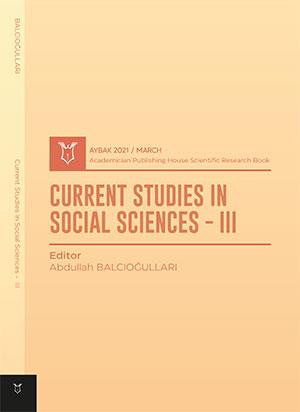
The Effects of Tourism on The Economic and Social Life of Rural Women
Synopsis
This study examines the effects of tourism on the economic and social lives of rural women, focusing on those living in the Ören neighborhood of Milas district in Muğla. Within the scope of the research, face-to-face surveys were conducted with 102 women alongside in-depth interviews with 10 women, resulting in the acceptance of all eight hypotheses. The findings reveal that the tourism sector provides rural women with new employment opportunities, granting them economic independence, boosting their self-confidence, and expanding their social networks to enhance their participation in social life. Women prefer tourism over agricultural activities due to its financial returns, opportunities for socialization, and less physically demanding nature. Additionally, tourism increases the added value of local products such as olives, olive oil, and handicrafts, generating supplementary household income. On the other hand, participation in tourism has not altered women's domestic responsibilities or traditional gender roles, as women continue to be predominantly employed in low-skilled positions such as kitchen work and cleaning, which serve as extensions of household chores. Consequently, tourism plays a highly strategic and positive role in empowering rural women socio-economically and improving their quality of life.
References
Alarcón, D. M. ve Mullor, E. C. (2018). Gender dimensions in tourism work. Contrast report 04, responsible tourism, alba sud publishing, Barcelona, 2018. ISBN: 978-84-09-01902-1
Andriotis, K., A. ve Vaughan, D. R. (2004). The Tourism Workforce and Policy: Exploring the Assumptions using Crete as the Case Study. Current Issues in Tourism. 7(1), 66-87
Aytuğ, H. K. (2016). Türkiye’de Tarımsal Turizmin Gelişme Potansiyeli: Yeşilköy Örneği AB İle Karşılaştırmalı Bir Analiz. Akademik Yaklaşımlar Dergisi. 7(1), 118-147
Baum, T. (2013). International perspectives on women and work in hotels, catering and tourism, Bureau for Gender Equality Working Paper 1/2013, Sectoral Activities Department Working Paper No. 289, by Professor Thomas Baum, International Labour Office, Sectoral Activities Department. Geneva, ILO, 2013.
Duffy, L., N, Cardenas, D. A., Chancellor, H. C. ve Byrd, E. T. (2011). Examining barriers, motivations, and perceptions of women working in the tourism industry: Case study of Ayampe, Ecuador. Travel and Tourism Research Association: Advancing Tourism Research Globally. 2011 ttra International Conference
Gıda, Tarım ve Hayvancılık Bakanlığı, Kırsal Alanda Kadının Güçlendirilmesi Eylem Planı (2012-2016). (2012). Eğitim Yayım ve Yayınlar Dairesi Başkanlığı, Ankara, ISBN: 978-605-4672-15-8
Hafçı, B. (2018). Could Rural Tourism be a Good Generator of Women Workforce?: The Case of Kirazli Town. International Rural Tourism and Development Journal. 2 (2): 05-09
Iakovıdou, O. (1997). Agro-Tourism In Greece: The Case Of Women Agro-Tourism Co-Operatives Of Ambelakia, Medit, s.1, 44-47
ILO. (2018). World Employment Social Outlook, Trends for Woman 2018 Global Snopshot, Geneva
Kaya, Ş. (2017). Turizmde Kadın Emeği. Karatahta İş Yazıları Dergisi, Sayı: 9/ Aralık 2017 (s: 1-22)
Lemma, A. F. (2014). Tourism ımpacts, evidence of impacts on employment, gender, income. Overseas Development Institute, Birmingam, UK
Lunardi, R., De Souza, M. ve Perurena, F. (2015). Participation and Decision in Rural Tourism: an analysis from a gender perspective, Tourism in Analysis, 26-2, DOI: http://dx.doi.org/10.11606/issn.1984-4867.v26i2p334-357
Obadić, A. ve Marić, I. (2009). The Significance of Tourism as an Employment Generator of Female Labour Force. Ekon. Misao Praksa DBK. (2009) 1, 93-114
Pertzelka, P., Malin, S. ve Goodwin, E. (2011), Rural Tourism and Gendered Nuances. Utah Recration & Tourism Matters, No. IORT/024
Purcell, K. (2005). Women’s employment in UK tourism: Gender roles and labour markets, (Ed) M. Thea, Sinclair, In Gender, Work and Tourism. Routledge, London, 33-56
Rad, S. T. (2011). An application of a women-oriented agro-tourism rural development model in improving local economy. African Journal of Business Management, Vol. 5(22), pp. 9714-9723,30
Ray, N., Das, D. K., Sengupta, P. P. ve Ghosh, S. (2012). Rural Tourism And It’s Impact On Socioeconomıc Condition: Evidence From West Bengal, India. Global Journal Of Business Research. 6 (2). 11-22
Scott, J. (2005). Chances and choices: Women and tourism in Northern Cyprus, (Ed) M. Thea, Sinclair, In Gender, Work and Tourism. Routledge, London, 57-88
Sinclair, M. T. (2005). Issues and theories of gender and work in tourism, (Ed) M. Thea, Sinclair, In Gender, Work and Tourism. Routledge, London, 1-14
Şit, M. (2016). Türkiye’de Turizm Sektörünün İstihdama Katkısı. Akademik Yaklaşımlar Dergisi. 7(1), 101-117
Tamandani, S., Bostani, M. K., ve Miri G. R. (2015). Women Empowerment through Tourism Case study: Zahedan City. International Journal of Scientific Engineering and Applied Science (IJSEAS) - Volume-1, Issue-7, 255-262
Tatar, F. ve Köroğlu, B. A. (2019). Ankara İli Beypazarı İlçesi Kırsal Turizm Gelişimi ve Yerel Kalkınmaya Etkisi, Planlama 2017, TMMOB Şehir Plancıları Odası, 27(2):115–128 doi: 10.14744/planlama.2017.26349
UNWTO (2011). Global report on women in tourism 2010
World Bank Group, (2017). Tourism For Development, Women and Tourism: Designing for Inclusion
Yasouri, M. ve Kalurazi Z. V. (2015). The Role of Tourism in the Development of Rural Women Entrepreneurship (Gurab-Pass Village, Fooman City). Arid Regions Geography Studies. 5(20)