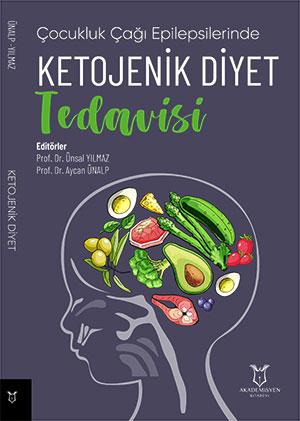
Ketojenik Diyetin Beyin Tümörleri Tedavisinde Kullanımı
Özet
Primer beyin tümörleri (PBT), özellikle çocukluk çağında yüksek malignite oranına ve kötü prognoza sahip olup Glioblastoma multiforme (GBM) bu grupta en sık görülen malign tümördür. Cerrahi rezeksiyon, radyoterapi ve kemoterapiyi içeren standart multidisipliner tedavi yaklaşımlarına rağmen ortalama sağ kalım süresinin iki yıldan kısa olması, hastalarda prognozu iyileştirebilecek alternatif ve tamamlayıcı tedavi seçeneklerinin araştırılmasını zorunlu kılmaktadır. Bu doğrultuda yüksek yağ, yeterli protein ve düşük karbonhidrat içeriğiyle endojen keton üretimi sağlayan ketojenik diyet (KD), dirençli epilepsi tedavisindeki kullanımının yanı sıra nöro-onkolojide de dikkat çekmektedir. Tümör hücrelerinde ketolitik enzim ekspresyonunun azalması ve Warburg etkisi nedeniyle glikoliz yolağına bağımlı olan beyin tümörleri, KD uygulamasının getirdiği kısıtlı karbonhidrat ortamında enerji kısıtlamasına maruz kalır. KD ile düşen kan glukozu ve gelişen ketozis; β-hidroksibütirat vasıtasıyla oksidatif strese karşı koruma sunar, tümör dokusundaki anjiogenez ve peritümöral ödem belirteçlerini baskılar ve radyoterapi ile kombinasyonda yaşam süresini uzatma potansiyeli sergiler. Klinik ve olgu çalışmalarında KD’nin tümörün glukoz metabolizmasını azalttığı, nöbet sıklığını düşürdüğü ve ciddi yan etki oluşturmadan güvenle uygulanabildiği tespit edilmiştir. Ancak lezzetsizlik gibi nedenlerle oluşan diyete uyum zorlukları ile diyet tipi, başlama zamanı ve hedeflenen ketozis seviyelerindeki standardizasyon eksiklikleri nedeniyle KD’nin PBT tedavisindeki etkinliğini kanıtlayacak yüksek kaliteli randomize kontrollü çalışmalara ihtiyaç duyulmaktadır.
Referanslar
Ostrom QT, Patil N, Cioffi G, ve ark. CBTRUS Statistical Report: Primary Brain and Other Central Nervous System Tumors Diagnosed in the United States in 2013-2017. Neuro Oncol 2020; 22:iv1.
Nabors LB, Portnow J, Ammirati M, ve ark. NCCN Guidelines Insights: Central Nervous System Cancers, Version 1.2017. J Natl Compr Canc Netw. 2017;15(11):1331-1345.
Clarke J, Butowski N, Chang S. Recent advances in therapy for glioblastoma. Arch Neurol. 2010;67(3):279-283.
Panhans CM, Gresham G, Amaral LJ, Hu J. Exploring the Feasibility and Effects of a Ketogenic Diet in Patients With CNS Malignancies: A Retrospective Case Series [published correction appears in Front Neurosci. 2020 Jun 25;14:661]. Front Neurosci. 2020;14:390.
Mauer GD, Brucker DP, Bahr O ve ark. Differential utilization of ketone bodies by neurons and glioma cell lines: a rationale for ketogenic diet as experimental glioma therapy. BMC Cancer (2011) 11:315.
Chang HT, Olson LK, Schwarz KA. Ketolytic and glycolytic enzymatic expression profiles in malignant gliomas: implication for ketogenic diet. Nutr Metab (2013) 10:47.
Warburg O. On the origin of cancer cells. Science 123, (1956a). 309–314. 10.1126/science.123.3191.30
Arismendi-Morillo GJ, Castellano-Ramirez AV Ultrastructural mitochondrial pathology in human astrocytic tumors: potentials implications pro-therapeutics strategies. J Electron Microsc 2008 (Tokyo) 57:33–39
Deighton RF, Le Bihan T, Martin SF ve ark. Interactions among mitochondrial proteins altered in glioblastoma. J Neurooncol (2014) 118:247–256
Arismendi-Morillo G, Castellano-Ramirez A, Seyfried TN. Ultrastructural characterization of the Mitochondria associated membranes abnormalities in human astrocytomas: functional and therapeutics implications. Ultrastruct Pathol (2017) 41:234–244
Kiebish MA, Han X, Cheng H, Chuang JH, Seyfried TN. Cardiolipin and electron transport chain abnormalities in mouse brain tumor mitochondria: lipidomic evidence supporting the Warburg theory of cancer. J Lipid Res (2008) 49:2545–2556
Shimazu T, Hirschey MD, Newman J ve ark. Suppression of oxidative stress by β-hydroxybutyrate, an endogenous histone deacetylase inhibitor. Science (2013) 339(6116):211–4.
Woolf EC, Curley KL, Qingwei L ve ark. The ketogenic diet alters the hypoxic response and affects expression of proteins associated with angiogenesis. Invasive potential and vascular permeability in a mouse glioma model. PLoS One (2015) 10(6):e0130357.
Abdelwahab M, Fenton K, Preul M ve ark. The ketogenic diet is an effective adjuvant to radiation therapy for the treatment of malignant glioma. PLoS One (2012) 7:e36197.
Adeberg S, Bernhardt D, Foerster R ve ark. The influence of hyperglycemia during radiotherapy on survival in patients with primary glioblastoma. 2015 ActaOncol., 1–7
Nebeling L.C., Miraldi F., Shurin S.B., Lerner E. Effects of a ketogenic diet ontumor metabolism and nutritional status in pediatric oncology patients: two case reports. 1995 J. Am. Coll. Nutr. 14 (2), 202–208.
van der Louw EJTM, Reddingius RE, Olieman JF, Neuteboom RF, Catsman-Berrevoets CE. Ketogenic diet treatment in recurrent diffuse intrinsic pontine glioma in children: A safety and feasibility study. Pediatr Blood Cancer. 2019 Mar;66(3): e27561. Epub 2018 Nov 28
Schwartz K, Chang HT, Nikolai M ve ark. Treatment of glioma patients with ketogenic diets: report of two cases treated with an IRB-approved energy-restricted ketogenic diet protocol and review of the literature. Cancer Metab. 2015;3:3. Published 2015 Mar 25.
Winter SF, Loebel F, Dietrich J. Role of ketogenic metabolic therapy in malignant glioma: a systematic review. Crit Rev Oncol Hematol (2017) 112:41–58.
Schwartz KA, Noel M, Nikolai M, Chang HT. Investigating the Ketogenic Diet As Treatment for Primary Aggressive Brain Cancer: Challenges and Lessons Learned. Front Nutr. 2018 Feb 23;5:11. PMID: 29536011; PMCID: PMC5834833.
Rieger J, Bahr O, Maurer GD ve ark. ERCO A pilot study of ketogenic diet in recurrent glioblastoma. Int J Oncol. 2014;44:1843–52.