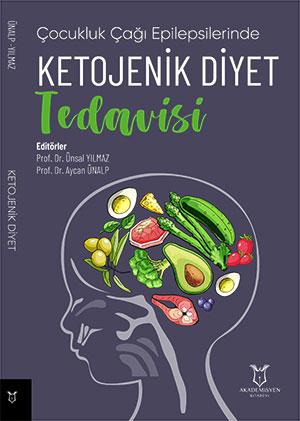
Epilepsi Tedavisinde Ketojenik Diyet Uygulamaları ve Etkinliği
Synopsis
Epilepsy is one of the most common neurological diseases in children, and seizure control cannot be achieved with antiepileptic drugs in approximately one-third of patients. In cases of drug-resistant epilepsy, before moving to alternative dietary therapies, it is essential to confirm the diagnosis of epilepsy, rule out non-epileptic conditions and treatable metabolic diseases, and evaluate patients for epilepsy surgery. Following these evaluations, four different ketogenic diet options can be applied: Classic Ketogenic Diet (KD), Medium-Chain Triglyceride Diet (MCT-KD), Modified Atkins Diet (MAD), and Low Glycemic Index Treatment (LGIT). Containing high fat, adequate protein, and very low carbohydrates, the Classic KD derives 90% of daily calories from fat and demonstrates high clinical efficacy, particularly in cases such as Dravet syndrome, infantile spasms, and GLUT-1 deficiency. Prior to initiating treatment, metabolic and organ function tests should be performed to examine potential contraindications, and calcium, vitamin D, selenium, and potassium citrate supplements should be administered to prevent side effects such as acidosis, dyslipidemia, kidney stones, and growth retardation. In managing the treatment, close monitoring of patient compliance, blood/urine ketone levels, and potential complications by a specialized team consisting of a pediatric neurologist, dietitian, and nurse is of critical importance. The positive effect of the diet on seizures usually begins within the first two weeks; if no response is obtained by the end of the third month, the treatment is discontinued, whereas in children achieving seizure control, the diet is maintained for two years and then gradually tapered off.
References
Fiest KM, Sauro KM, Wiebe S, et al. Prevalence and incidence of epilepsy: A systematic review and meta-analysis of international studies. Neurology. 2017;88:296-303. doi:10.1212/WNL.0000000000003509
Serdaroglu A, Ozkan S, Aydin K, Gucuyener K, Tezcan S, Aycan S. Prevalence of Epilepsy in Turkish Children Between the Ages of 0 and 16 Years. J Child Neurol. 2004;19:271-274. doi:10.1177/088307380401900406
Yılmaz U, Yılmaz TS, Dizdarer G, Akıncı G, Güzel O, Tekgül H. Efficacy and tolerability of the first antiepileptic drug in children with newly diagnosed idiopathic epilepsy. Seizure. 2014; 23: 252-9. doi: 10.1016/j.seizure.2013.12.001
Sillanpää M, Schmidt D. Natural history of treated childhood-onset epilepsy: prospective, long-term population-based study. Brain. 2006;129:617-624. doi:10.1093/brain/awh726
Kwan P, Arzimanoglou A, Berg AT, et al. Definition of drug resistant epilepsy: consensus proposal by the ad hoc Task Force of the ILAE Commission on Therapeutic Strategies. Epilepsia. 2010;51:1069-1077. doi:10.1111/j.1528-1167.2009.02397.x
Yılmaz Ü, Serdaroğlu A, Gürkaş E, Hirfanoğlu T, Cansu A. Childhood paroxysmal nonepileptic events. Epilepsy Behav. 2013;27:124-9.doi: 10.1016/j.yebeh.2012.12.028
Arain AM, Song Y, Bangalore-Vittal N, Ali S, Jabeen S, Azar NJ. Long term video/EEG prevents unnecessary vagus nerve stimulator implantation in patients with psychogenic nonepileptic seizures. Epilepsy Behav. 2011;21:364-366. doi:10.1016/j.yebeh.2011.06.003
van Karnebeek CDM, Sayson B, Lee JJY, Tseng LA, Blau N, Horvath GA, Ferreira CR. Metabolic Evaluation of Epilepsy: A Diagnostic Algorithm With Focus on Treatable Conditions. Front Neurol. 2018;9:1016. doi: 10.3389/fneur.2018.01016
Ryvlin P, Cross JH, Rheims S. Epilepsy surgery in children and adults. Lancet Neurol. 2014;13:1114-1126. doi:10.1016/S1474-4422(14)70156-5
Wheless JW, Gienapp AJ, Ryvlin P. Vagus nerve stimulation (VNS) therapy update. Epilepsy Behav. 2018;88S:2-10. doi:10.1016/j.yebeh.2018.06.032
van der Louw E, van den Hurk D, Neal E, et al. Ketogenic diet guidelines for infants with refractory epilepsy. Eur J Paediatr Neurol. 2016;20:798-809. doi:10.1016/j.ejpn.2016.07.009
Wilder RM. The effect of ketonemia on the course of epilepsy. Mayo Clin Bull. 1921;2:307.
Livingston S. Comprehensive management of epilepsy in infancy, childhood and adolescence. Charles C. Thomas, Springfield, IL, 1972. 378–405.
Freeman JM, Vining EP, Pillas DJ, Pyzik PL, Casey JC, Kelly LM. The efficacy of the ketogenic diet-1998: a prospective evaluation of intervention in 150 children. Pediatrics. 1998;102:1358-63. doi: 10.1542/peds.102.6.1358.
Wells J, Swaminathan A, Paseka J, Hanson C. Efficacy and Safety of a Ketogenic Diet in Children and Adolescents with Refractory Epilepsy-A Review. Nutrients. 2020;12(6):E1809.
Martin-McGill KJ, Jackson CF, Bresnahan R, Levy RG, Cooper PN. Ketogenic diets for drug-resistant epilepsy. Cochrane Database Syst Rev. 2018;11(11):CD001903. doi:10.1002/14651858
Neal EG, Chaffe H, Schwartz RH, Lawson MS, Edwards N, Fitzsimmons G, et al. A randomized trial of classical and medium-chain triglyceride ketogenic diets in the treatment of childhood epilepsy. Epilepsia 2009;50:1109–17
Sourbron J, Klinkenberg S, van Kuijk SMJ, Lagae L, Lambrechts D, Braakman HMH, Majoie M. Ketogenic diet for the treatment of pediatric epilepsy: review and meta-analysis. Childs Nerv Syst. 2020;36:1099-1109. doi: 10.1007/s00381-020-04578-7.
Thammongkol S, Vears DF, Bicknell-Royle J, et al. Efficacy of the ketogenic diet: which epilepsies respond? Epilepsia. 2012;53:e55-9. doi:10.1111/j.1528-1167.2011.03394.x
Kossoff EH, Thiele EA, Pfeifer HH, McGrogan JR, Freeman JM. Tuberous sclerosis complex and the ketogenic diet. Epilepsia. 2005;46:1684-1686. doi:10.1111/j.1528-1167.2005.00266.x
Lim Z, Wong K, Olson HE, Bergin AM, Downs J, Leonard H. Use of the ketogenic diet to manage refractory epilepsy in CDKL5 disorder: Experience of >100 patients. Epilepsia. 2017;58:1415-1422. doi:10.1111/epi.13813
Prezioso G, Carlone G, Zaccara G, Verrotti A. Efficacy of ketogenic diet for infantile spasms: A systematic review. Acta Neurol Scand. 2018;137:4-11. doi:10.1111/ane.12830
Appavu B, Vanatta L, Condie J, Kerrigan JF, Jarrar R. Ketogenic diet treatment for pediatric super-refractory status epilepticus. Seizure. 2016;41:62-65. doi:10.1016/j.seizure.2016.07.006
Kass HR, Winesett SP, Bessone SK, Turner Z, Kossoff EH. Use of dietary therapies amongst patients with GLUT1 deficiency syndrome. Seizure. 2016;35:83-87. doi:10.1016/j.seizure.2016.01.011
Sofou K, Dahlin M, Hallböök T, Lindefeldt M, Viggedal G, Darin N. Ketogenic diet in pyruvate dehydrogenase complex deficiency: short- and long-term outcomes. J Inherit Metab Dis. 2017;40:237-245. doi:10.1007/s10545-016-0011-5
Cai, Q.Y.; Zhou, Z.J.; Luo, R.; Gan, J.; Li, S.P.; Mu, D.Z.;Wan, C.M. Safety and tolerability of the ketogenic diet used for the treatment of refractory childhood epilepsy: A systematic review of published prospective studies. World J. Pediatrics 2017, 13, 528–536
Yılmaz Ü, Edizer S, Köse M, et al. The effect of ketogenic diet on serum lipid concentrations in children with medication resistant epilepsy. Seizure. 2021;91:99-107. doi:10.1016/j.seizure.2021.06.008
Seo JH, Lee YM, Lee JS, Kang HC, Kim HC. Efficacy and tolerability of the ketogenic diet according to lipid: nonlipid ratios - comparison of 3:1 with 4:1 diet. Epilepsia 2007;48:801-5. doi:10.1111/j.1528-1167.2007.01025.x
Suo C, Liao J, Lu X, et al. Efficacy and safety of the ketogenic diet in Chinese children. Seizure. 2013;22:174-178. doi:10.1016/j.seizure.2012.11.014
Kang HC, Kim YJ, Kim DW, Kim HD. Efficacy and safety of the ketogenic diet for intractable childhood epilepsy: Korean multicentric experience. Epilepsia 2005, 46:272–279.
Thompson L, Fecske E, Salim M, Hall A. Use of the ketogenic diet in the neonatal intensive care unit-Safety and tolerability. Epilepsia. 2017;58:e36-e39. doi:10.1111/epi.13650
Kossoff EH, Zupec-Kania BA, Auvin S, et al. Optimal clinical management of children receiving dietary therapies for epilepsy: Updated recommendations of the International Ketogenic Diet Study Group. Epilepsia Open. 2018;3:175-192. doi:10.1002/epi4.12225
Coppola G, Epifanio G, Auricchio G, Federico RR, Resicato G, Pascotto A. Plasma free carnitine in epilepsy children, adolescents and young adults treated with old and new antiepileptic drugs with or without ketogenic diet. Brain Dev. 2006;28:358-365. doi:10.1016/j.braindev.2005.11.005
Spilioti M, Pavlou E, Gogou M, et al. Valproate effect on ketosis in children under ketogenic diet. Eur J Paediatr Neurol 2016;20:555–559. doi:10.1016/j.ejpn.2016.04.003
Kossoff EH, Pyzik PL, McGrogan JR, Rubenstein JE. The impact of early versus late anticonvulsant reduction after ketogenic diet initiation. Epilepsy Behav. 2004;5:499-502. doi:10.1016/j.yebeh.2004.03.011
Christodoulides SS, Neal EG, Fitzsimmons G, et al. The effect of the classical and medium chain triglyceride ketogenic diet on vitamin and mineral levels. J Hum Nutr Diet 2012;25:16–26. doi:10.1111/j.1365-277X.2011.01172.x
Sirikonda NS, Patten WD, Phillips JR, Mullett CJ. Ketogenic diet: rapid onset of selenium deficiency-induced cardiac decompensation. Pediatr Cardiol. 2012;33:834-838. doi:10.1007/s00246-012-0219-6
McNally MA, Pyzik PL, Rubenstein JE, Hamdy RF, Kossoff EH. Empiric use of potassium citrate reduces kidney-stone incidence with the ketogenic diet. Pediatrics. 2009;124:e300-4. doi:10.1542/peds.2009-0217
Furth SL, Casey JC, Pyzik PL, et al. Risk factors for urolithiasis in children on the ketogenic diet. Pediatr Nephrol. 2000;15:125-128.
Sampath A, Kossoff EH, Furth SL, Pyzik PL, Vining EPG. Kidney stones and the ketogenic diet: risk factors and prevention. J Child Neurol. 2007; 22:375–378.
Kossoff EH, Laux LC, Blackford R, et al. When do seizures usually improve with the ketogenic diet? Epilepsia. 2008;49:329-333. doi:10.1111/j.1528-1167.2007.01417.x
Veggiotti P, De Giorgis V. Dietary Treatments and New Therapeutic Perspective in GLUT1 Deficiency Syndrome. Curr Treat Options Neurol. 2014;16:291. doi:10.1007/s11940-014-0291-8
Hong AM, Turner Z, Hamdy RF, Kossoff EH. Infantile spasms treated with the ketogenic diet: prospective single-center experience in 104 consecutive infants. Epilepsia. 2010;51:1403-1407. doi:10.1111/j.1528-1167.2010.02586.x