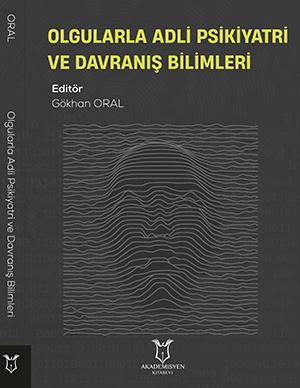
Travma Sonrası Stres Bozukluğunun Uzun Zamanlı Etkileri: Olgu Sunumu
Synopsis
This study discusses the forensic psychiatric evaluation and long-term effects of a 16-year-old case who developed Post-Traumatic Stress Disorder (PTSD) and complicated grief symptoms following a motor vehicle accident. The patient, who witnessed the death of her close friend of nine years sitting next to her during the crash, presented with severe psychiatric symptoms including unhappiness, startle responses, nightmares, social isolation, skin picking, and a suicide attempt. Followed by child and adolescent psychiatry clinics, she was diagnosed with Acute Stress Disorder, PTSD, and Major Depressive Disorder; despite pharmacological treatments with Sertraline, Fluoxetine, Venlafaxine, and Quetiapine along with psychotherapy, no significant improvement in her symptoms was achieved. Following a 13.5-month follow-up, the trauma showed a tendency toward chronicity. In the forensic evaluation conducted under the Regulation on Disability Assessment for Adults, the patient was classified in the category whose functionality does not improve with treatment, resulting in a calculated body function loss rate of 60% and a one-month temporary incapacity period. This case illustrates that traumatic events can lead to long-term psychological impairment in adolescents and highlights the necessity of close, long-term monitoring to prevent additional psychopathology.
References
Biçer Ü, Tırtıl L, Kurtaş Ö, Aker T. Adli psikiyatri. Klinik Gelişim 2009; 22(Özel Sayı): 126-132.
Can İÖ, Demiroğlu Uyanıker Z, Ulaş H, Karabağ G, Cimilli C, Salaçin S. Travma mağdurlarında ruhsal travma bulguları. Nöropsikiyatri Arşivi 2013; 50: 230-236.
Association AP. Diagnostic and statistical manual of mental disorders (DSM-5®).USA: American Psychiatric Pub (2013).
Butler DJ, Moffic HS, Turkal NW. Post-traumatic stress reactions following motor vehicle accidents. Am Fam Physician (1999) 60(2):524–31.
Undavalli C, Das P, Dutt T, Bhoi S, Kashyap R. PTSD in post-road traffic accident patients requiring hospitalization in Indian subcontinent: a review on magnitude of the problem and management guidelines. J Emerg Trauma Shock (2014) 7(4):327. doi: 10.4103/0974-2700.142775
Avidor S, Benyamini Y, Solomon Z. J Gerontol B Psychol Sci Soc Sci. 2016 May;71(3):415-24. doi: 10.1093/geronb/gbu150. Epub 2014 Oct 16.PMID: 25324296
World Health Organization, 2013. WHO global status report on road safety 2013: supporting a decade of action. World Health Organization.
Asuquo JE, Edet BE, Abang IE, et al. Depression and posttraumatic stress disorder among road traffic accident victims managed in a Tertiary hospital in Southern Nigeria. Niger J Clin Pract 2017;20:170–5.
Dai W, Kaminga AC, Tan H, et al. Comorbidity of post-traumatic stress disorder and anxiety in flood survivors: prevalence and shared risk factors. Medicine 2017;96:e7994.
Landolt MA, Vollrath ME, Gnehm HE, et al. Post-traumatic stress impacts on quality of life in children after road traffic accidents: prospective study. Aust N Z J Psychiatry 2009;43:746–53.
Bassuk EL, Richard MK, Tsertsvadze A. The prevalence of mental illness in homeless children: a systematic review and meta-analysis. J Am Acad Child Adolesc Psychiatry. 2015; 54(2):86-96.e82
Muscatelli S, Spurr H, O’Hara NN, et al. Prevalence of depression and posttraumatic stress disorder after acute orthopaedic trauma: a systematic review and meta-analysis. J Orthop Trauma. 2017;31(1):47-55.
Attanayake V, McKay R, Joffres M, et al. Prevalence of mental disorders among children exposed to war: a systematic review of 7,920 children. Med Confl Surviv. 2009;25(1): 4-19.
Dai W, Lui A, Kaminga AC, Deng J, Lai Z, Wen SW: Prevalence of Posttraumatic stress disorder among Children and Adoloscents following Road Traffic Aciidents. A Meta Analysis. The Canadian Journal Of Canadian Psychiatry ,2018; 63 (2):798-808
Hruska B, Irish LA, Pacella ML, Sledjeski EM, Delahanty DL. J Anxiety Disord. 2014 Oct;28(7):644-9.
D€uckers, M.L., & Olff, M. (2017). Does the vulnerabilityparadox in PTSD apply to women and men? An exploratorystudy. Journal of Traumatic Stress, 30, 200–204.
Suomalainen L, Haravuori H, Berg N ve ark. (2011) A cont rolled follow-up study of adolescents exposed to a school shooting psychological consequences after four months. Eur Psychiatry, 26: 490-497.
Lin W, Gong L, Xia M, Dai W. Prevalence of posttraumatic stress disorder among road traffic accident survivors: a PRISMA-compliant meta-analysis. Medicine (Baltimore) 2018;97:e9693.
Asuquo JE, Edet BE, Abang IE, Essien EA, Osakwe OG, Aigbomain EJ, Chigbundu KC. Depression and posttraumatic stress disorder among road traffic accident victims managed in a Tertiary hospital in Southern Nigeria. Niger J Clin Pract. 2017 Feb;20(2):170-175. doi: 10.4103/1119-3077.196114. PMID: 28091432.
Kenardy, J., Edmed, S. L., Shourie, S., Warren, J., Crothers, A., Brown, E. A., … HeronDelaney, M. (2018). Changing patterns in the prevalence of posttraumatic stress disorder, major depressive episode and generalized anxiety disorder over 24 months following a road traffic crash: Results from the UQ SuPPORT study. Journal of Affective Disorders, 236, 172–179. doi: 10.1016/j.jad.2018.04.090.
Bay, N., Gültekin Akduman, G. ve Alisinanoğlu, F. (2009). Trafik kazalarının çocuklar üzerindeki etkisi. Ulaşım ve Trafik Güvenliği Dergisi, 3, 16–24.
Lynch KS, Lachman ME. J Trauma Stress. 2020 Oct;33(5):773-782. doi: 10.1002/jts.22522.
Karancı, A. N., Işıklı, S., Aker, A. T., Gül, E. İ., Erkan, B. B., Özkal, H., & Güzel, H. Y. (2012). Personality, posttraumatic stress and trauma type: factors contributing to posttraumatic growth and its domains in a Turkish community sample. European Journal of Psychotraumatology, 3(1), doi: 10.3402/ejpt.v3i0.17303.
Kessler, R. C., Aguilar-Gaxiola, S., Alonso, J., Benjet, C., Bromet, E. J., Cardoso, G.,… Koenen, K. C. (2017). Trauma and PTSD in the WHO World Mental Health Surveys. European Journal of Psychotraumatology,27(8), DOI:10.1080/20008198.2017.1353383.
Ayaz, A. B., İmren, S. G., & Ayaz, M. (2012). Ergenlerde Arkadaş Ölümü Sonrası Travma Belirtileri ve İlişkili Etmenler. Klinik Psikiyatri Dergisi, 15(4), 199-207.
Emre, Ü. R. E. R. (2017). Çocuklarda ölüm ve yas üzerine bir inceleme. Dini Araştırmalar, 20(52 (15-12-2017)), 131-140.
World Health Organization (2018). International Classification of Diseases 11th Revision: The global standard for diagnostic health information. https://icd.who.int/browse11/l-m/en
Rittmannsberger D, Kocman A, Weber G, Lueger-Schuster B. Exposure and pot traumatic stress disorder in people with intellectual disabilities. A Delphi expert rating . J Appl Res Intellect Disabil. 2019; 32:558-567.
Zhao M, Wang W, Jiang Z, Zhu Z, Liu D, Pan F.Front Cell Dev Biol. 2020 Jul 31;8:682. doi: 10.3389/fcell.2020.00682. eCollection 2020.
Yaşar Teke H, Akduman B, Doğan B, Bilge Y. Posttravmatik stres Bozukluğu ve Maluliyet. Adli Psikiyatri Dergisi,2007;4 (2):25-30