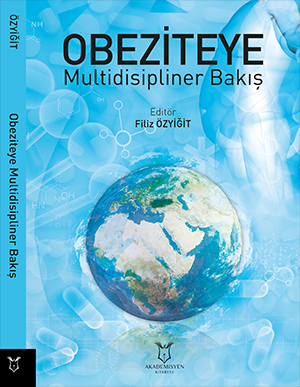
Obezite VE Etik
Synopsis
Obesity is defined by the World Health Organization as an abnormal or excessive accumulation of body fat that impairs health, representing a complex global disease with its own pathophysiological mechanisms, disability capacity, and comorbidities. Individuals with a body mass index (BMI) of 30 or higher are classified as obese. In addition to genetic, environmental, and endocrinological factors, irregular eating habits, sedentary behavior, and personal beliefs significantly contribute to its development. Obesity predisposes individuals to numerous chronic conditions, including hypertension, diabetes, cardiovascular diseases, respiratory difficulties, joint degeneration, and various cancers, thereby negatively impacting life quality and increasing specific care requirements. Furthermore, obese individuals frequently encounter psychosocial challenges such as discrimination, social stigma, depression, and reduced socialization. Healthcare professionals, particularly nurses, hold crucial roles in assessing attitudes, delivering evidence-based care through frameworks like the Health Belief Model, providing patient education, and advocating for individuals. Treatment modalities involving surgical interventions, lifestyle modifications, and complementary therapies necessitate strict ethical sensitivity regarding patient autonomy, informed consent, non-maleficence, and justice. Given the substantial economic burden and healthcare costs associated with obesity, equitable resource allocation and the implementation of tailored multidisciplinary ethical approaches for vulnerable populations—such as women, children, pregnant individuals, and the elderly—are of vital importance.
References
World Health Organization (WHO). Obesity: preventing and managing the global epidemic. WHO Technical Report Series, 2000; 894.
Conway, B. Rene, A. Obesity as a disease: no lightweight matter. Obesity Reviews, 2004;5(3):145–151.
Casazza, K., Brown, A. Astrup, A. et al. Weighing the evidence of common beliefs in obesity research. Critical reviews in food science and nutrition, 2015; 55(14): 2014–2053.
T. C. Sağlık Bakanlığı Türkiye obezite ile mücadele ve kontrol programı 2009-2013. Temel Sağlık Hizmetleri Genel Müdürlüğü, Ankara. 2009.
Besler, H. T. Rakıcıoğlu, N. Türkiye’ye özgü besin ve beslenme rehberi. ankara: merdiven reklam tanıtım. The International Olympic Committee and the International Society for Sports Nutrition. South African Journal Of Clinical Nutrition, 2015; 26(1), 6-16.
Usta, E. Akyolcu, N. Cerrahi hemşirelerinin fazla kilolu/ obez hasta bakımına ilişkin bilgi ve uygulamalarının değerlendirilmesi. F.N. Hem. Derg 2014;22(1): 1-7.
Jiménez-Cruz, A. De Escobar-Aznar, Y. M. Castillo-Ruiz, O. et all. Beliefs about causes and consequences of obesity among women in two Mexican cities. Journal of health, population, and nutrition, 2012; 30(3): 311–316.
Nurwanti, E. Uddin, M. Chang, J.-S. et al. Roles of sedentary behaviors and unhealthy foods in ıncreasing the obesity risk in adult men and women: a cross-sectional national study. Nutrients, 2018; 10(6):704.
Drywień, M. Górnicka, M. Kulik S. et al. Patterns of avoiding nutrition mistakes in metropolitan adolescents are associated with sex, nutrition knowledge, physical activity, and family environment. Nutrients, 2021;13(2):433.
Camden, S. G. (2006). Nursing care of the bariatric patient. Bariatric Nursing And Surgical Patient Care, 1(1): 21-30.
Sapp, S.G. Weng, C.Y. Examination of the healthbelief model to predict the dietary quality and body mass of adults. International Journal of Consumer Studies. 2006.
Nejad, L. Wertheim, E. Greenwood, K. Comparison of the health belief model and the theory of planned behavior in the prediction of dieting and fasting behavior. E-Journal of Applied Psychology. 2005; 1(1): 63-74.
Tekkurşun, D. G. Cicioğlu, H.İ., Sağlıklı beslenmeye ilişkin tutum ölçeği: geçerlik ve güvenirlik çalışması. Gaziantep Üniversitesi Spor Bilimleri Dergisi, 2019; 4(2), 256-274.
Akpınar, N. B. Ceran, M. A. Kronik hastalıklar ve rehabilitasyon hemşireliği. Adnan Menderes Üniversitesi Sağlık Bilimleri Fakültesi Dergisi, 2019; 3(2): 140-152.
Çakır, B. Yardım, N. Kocadağ, S. Obezite ile mücadelede medyada yer alan zayıflama amaçlı yarışma programları için bilimsel ve etik değerlendirme, Beslenme ve Diyet Dergisi 2014; 42(1):73-79.
Dikmen, K. Ersoy, E. Obezite cerrahisi ve etik, Turkiye Klinikleri J Med Ethics Law Hist-Special Topics. 2015;1(3):22-6.
Williams, J. R. (2006) Dünya Tabipler Birliği Tıp Etiği El Kitabı, Çeviren: Civaner, M. World Medical Association, Gözden geçirilmiş 3. Baskı.
Özpancar, N. Hipertansiyonda kanıta dayalı bakım uygulamaları. Turkish Journal of Cardiovascular Nursing, 2016; 7(1):2-11.
Buyukbese, M. A. Tas, F. Hipertansiyonda farkındalık ve hemşirenin rolü. TAF Prev Med Bull, 2013;12(6):729-734.
Kes, D. Gökdoğan, F. Tuna, D. Hipertansiyonu olan hastaların tamamlayıcı ve alternatif tedavi kullanımı: literatür taraması. Journal of Cardiovascular Nursing, 2016;7(12):40-55.
Ekim, M. Ekim, H. Tuncer, M. Hipertansiyon tedavisinde bitkisel ürünlerin yeri. Van Tıp Dergisi, 2019; 26(4): 564-568.
Çivilibal, M. Çocuklarda hipertansiyona yaklaşım. Haseki Tıp Bülteni, 2013, DOI: 10.4274/Haseki.1067:31-35.
Dursun, M. Dal, N.A. Gebelikte hipertansiyon. Munzur Üniversitesi Bilim ve Gençlik Dergisi, 2017;5(2):28-43.
Ünsar, S. Yaşlılarda hipertansiyon ve hemşirelik bakımı. İstanbul Üniversitesi F. N. H. Y. O. Dergisi, 2006; 14(56):137-149.
Özdemir, Ü. Taşcı S. Kronik hastalıklarda psiko sosyal sorunlar ve bakım. Erciyes Üniversitesi Sağlık Bilimleri Fakültesi Dergisi, 2013;1 (1):57-72.